

teff
Overview
Teff is a grain—a gluten free grain! It grows predominantly in Ethiopia and Eritrea.
Fun facts: One pound of teff grains can grow an acre of teff (in comparison with wheat, which takes about 100 pounds of grains to grow one acre). Teff is also the fastest sprouting grain, taking only 36h to sprout!
Identification
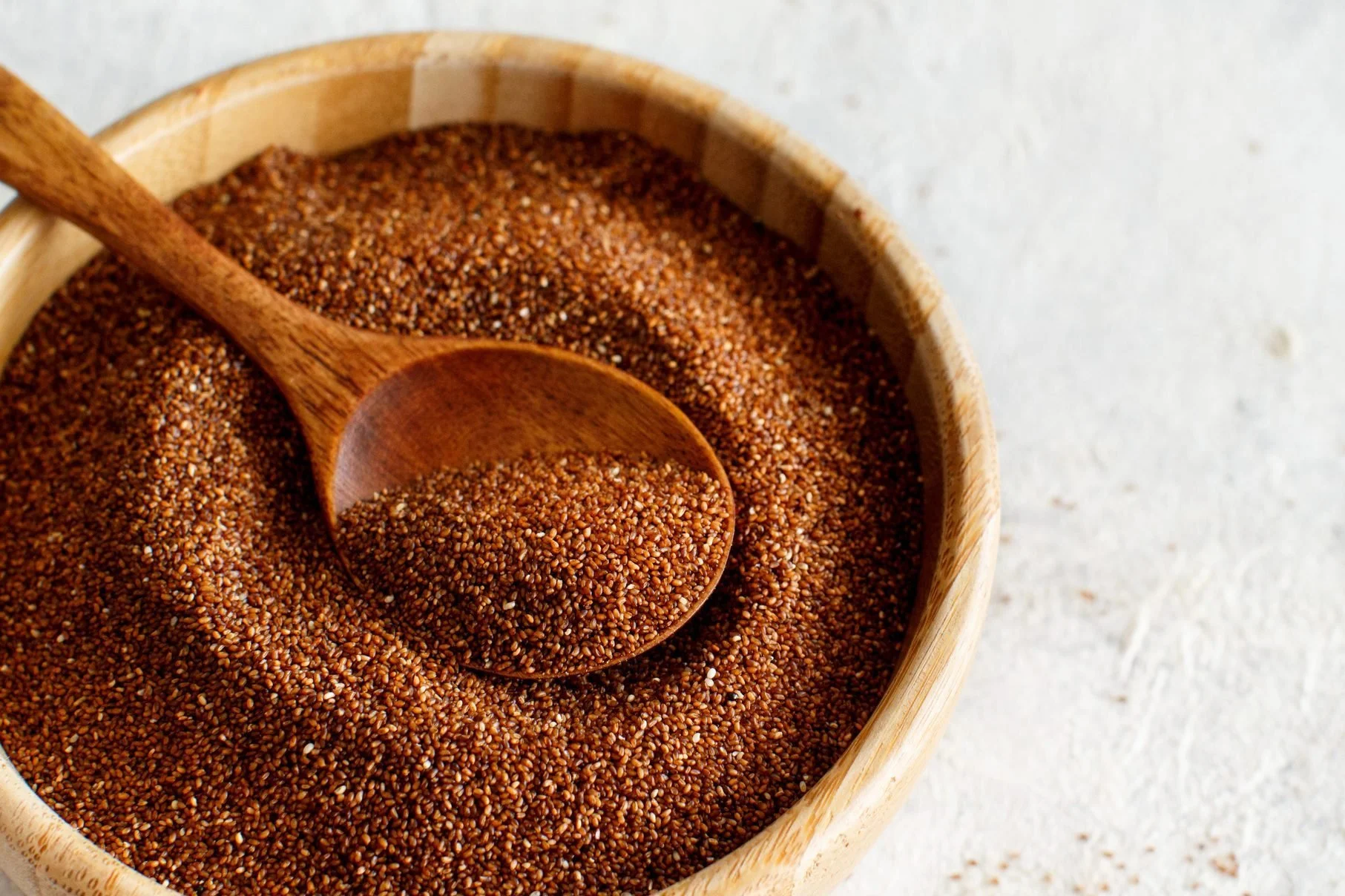
Teff is less than 1mm in diameter (similar to a poppy seed) and comes in a variety of colors, from white and red to dark brown. This grain has a very mild, nutty flavor.
Nutrition Info
Half a cup of uncooked teff has about 354 calories, 12.8g of protein, 70.6g of carbohydrates, 7.7g of fiber, and 2.3g of fat.
Teff is rich in B vitamins and is a great source of minerals including calcium, copper, iron, magnesium, manganese, phosphorus, potassium, and zinc.
Selection
Teff can be purchased as a whole grain or ground into flour. To get its full nutrient benefits, it’s best to purchase the whole grain. Whole grain teff can be found in most health food stores.
Storage
Store uncooked teff in a cool, dry place in a tightly sealed container. Uncooked teff will keep for up to one year if properly stored.
Once cooked, store teff in the fridge for up to five days.
Preparation
Uncooked, whole grain teff can be used in baking (cakes, breads, muffins, etc) much like you would use seeds. Teff is also a great addition to soups and stews. It serves as a nutritious thickening agent, making it great for heavier, cool-weather meals.
To cook on its own, put 1/2 cup teff grains, 2 cups water, and 1/4 teaspoon of salt in a saucepan. Bring contents to a boil and then reduce the heat and simmer for about 15-20 minutes or until water is absorbed. Remove from the heat and let stand for about five minutes. You can then use it in a similar fashion as quinoa or oats.