

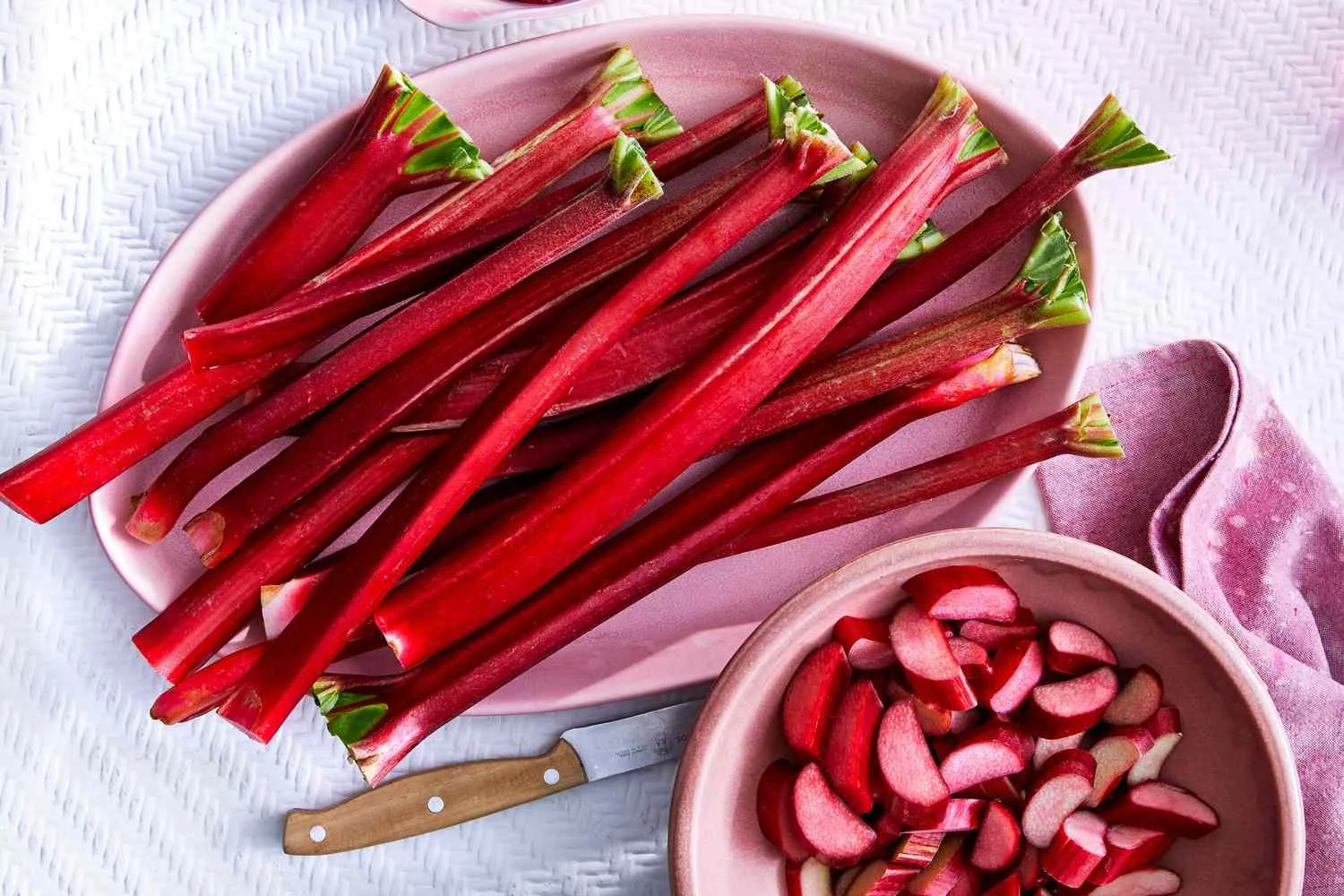
rhubarb
Overview
Rhubarb is a perennial plant with thick, fleshy stalks, and wide, flat green leaves. It’s technically a vegetable but usually treated as a fruit.
The leaves of the rhubarb plant are poisonous but the stalks can be quite tasty and nutritious. Their sour-tart taste can be balanced with the addition of other fruits or sugars.
Rhubarb is cultivated but it also grows wild. Northern US and Canada are suitable climates for rhubarb. The plant comes in season in early spring, offering a sign that the winter season is coming to an end.
Identification
Rhubarb has large, green stalks that turn red as they ripen. The color of rhubarb varies; on a single stalk you may see hints of pink, light red, deep red, and green.
The leaves themselves are wide, flat, and leafy; however these are not edible and are usually removed during harvest.
The plant size can vary, but rhubarb plants can grow to be quite big and lush. Rhubarb stalks are usually long and thick — about 1” wide, and at least 10” long — though you may come across smaller stalks, too.
Nutrition Info
One cup of uncooked rhubarb contains 26 calories, 1.1g of protein, 0.2g of fat, 5.5g of carbohydrates, 2.2g of fiber, and 1.3g of sugar.
Rhubarb offers lots of vitamins and minerals. It’s a very good source of vitamin C, vitamin K, potassium, and manganese. It’s loaded with calcium, and it’s also a good source of magnesium.
Selection
Look for bright red stalks. Lots of green color indicates the rhubarb is not fully ripe. The riper the plant, the sweeter it will be. Conversely, the less ripe it is, the more tart / sour it will be.
Moderately thin stalks tend to be best. Super-sized stalks tend to be more sour and can have a stringier or coarser texture. Slightly smaller stalks can be more tender, and break down more easily when cooking.
Avoid stalks that are overly wilted, soft or rubbery. Look for crisp, firm stalks.
Buy rhubarb as fresh as possible. If you live in a northern / cooler climate, you may be able to find it at a farmers’ market during the spring — or grow it in your own backyard.
If you can’t find fresh rhubarb, you may be able to find it frozen. Check the frozen fruits and vegetables section of your supermarket.
Storage
Fresh rhubarb wilts quickly. After purchase, keep the stalks wrapped tightly in a plastic bag in the crisper drawer of your refrigerator and eat within a few days for maximum freshness.
Cooked rhubarb can last for several days in a sealed container in your fridge.
For longer storage, you can freeze cut rhubarb in plastic bags for up to six months.
Preparation
To eat rhubarb, cut off the base of the stalks and any leafy bits that remain. (The leaves are inedible so if you’re harvesting from a whole plant, be sure to remove the leaves.)
Rinse the rhubarb stalks in cool water. You can then slice and cook them any way you like, but a typical method is to cut the stalks into 1” chunks, then stew them in a sugar-water mixture.
At the end of cooking, the rhubarb will be tender and thread-like and its red color will have intensified.
Rhubarb has a sweet-tart flavor. Sweetener and / or sweet fruit is usually added to rhubarb to balance its tart flavor and make it more palatable, especially as a dessert. For this reason it is often paired with strawberries, as in the classic strawberry-rhubarb pie.
While desserts (rhubarb crumble, rhubarb with custard or ice cream, rhubarb cakes or tarts to name a few) are all popular uses for rhubarb, this vegetable can be used in savory preparations. Incorporate cooked rhubarb into a barbecue sauce, use it in a marinade for grilled or roasted meats, slice it finely and add it to a salad, or pickle it for a tangy condiment.
Rhubarb can also play a starring role at breakfast: stir stewed rhubarb into your yogurt or oatmeal, add a few cubes of frozen rhubarb into your smoothies, make a rhubarb jam, or whip up some rhubarb muffins or pancakes.