

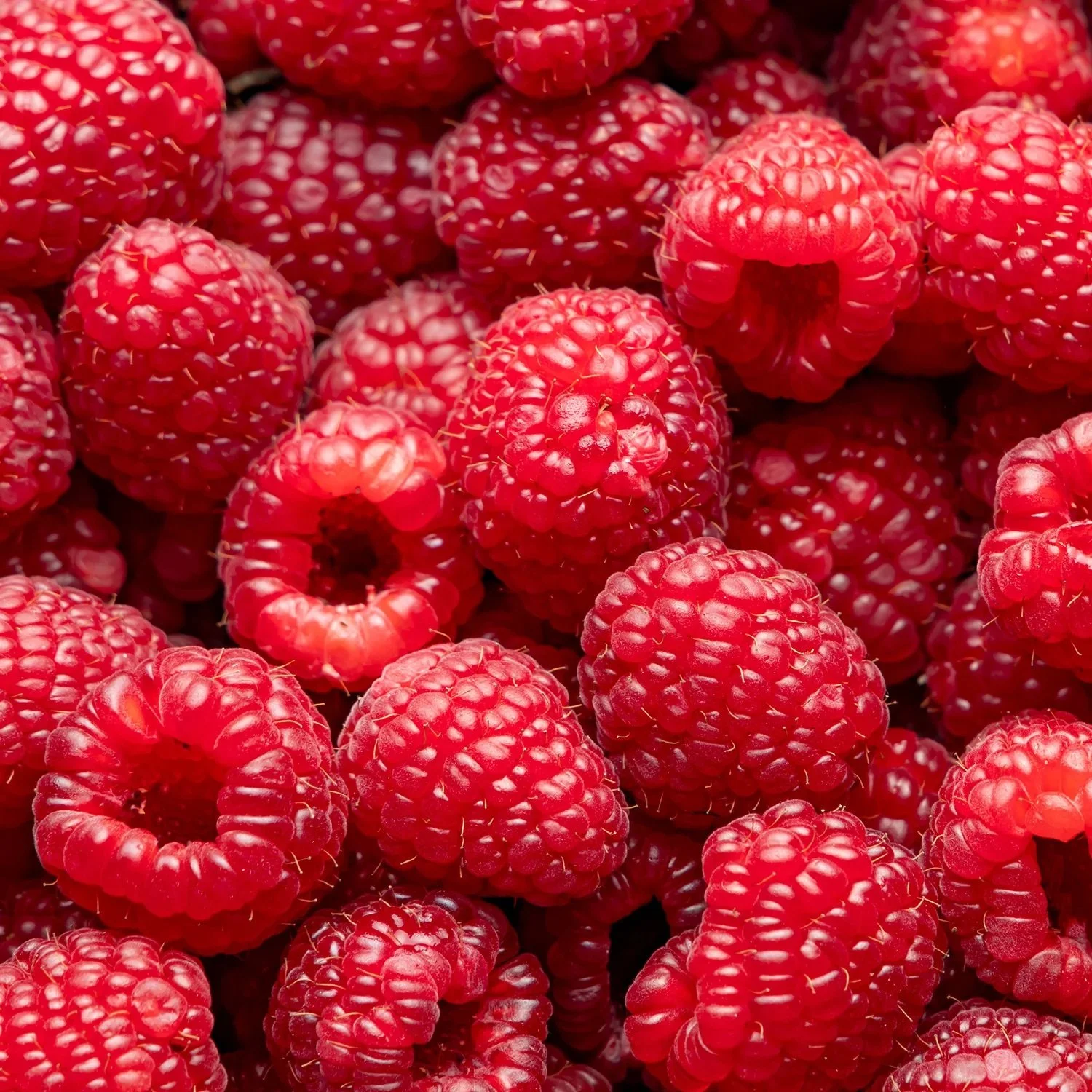
raspberry
Overview
Raspberries are the edible fruit of a prickly, woody-stemmed plant in the Rubus genus, which makes them part of the rose family.
Grown in temperate climates around the world, raspberries are a popular commercial fruit crop (though they can also be found wild).
While different varieties exist — including black, blue, golden and pink ones — the most common raspberries are bright red when ripe. Seasonal from about May to November, depending on climate, they are juicy, fragrant, flavorful, and sweet.
Identification
Common raspberries are bright red, and have a rounded cone-like shape. (Note that other varieties can range in color and have a tighter, more rounded shape.) Inspect a raspberry closely and you’ll see that each berry is made up of sections of juicy pulp.
Nutrition Info
A half cup of raspberries contains 32 calories, 0.74 g of protein, 0.40g of fat, 7.34g of carbohydrates, 4.0g of fiber, and 2.72g of sugar.
Raspberries are also a good source of calcium, magnesium, phosphorus, some iron, and plenty of potassium. They are also rich in vitamin C, along with folate and vitamin K.
Plus, raspberries contain antioxidants, which may support the nervous system and help with disease prevention.
Selection
Look for red, ripe berries. (Not only are ripe berries the tastiest, they also pack the biggest nutritional punch.)
Avoid berries that appear moldy, wet and mushy, or severely blemished. Raspberries are delicate and go bad easily, so look for those that have been tenderly handled.
During the summer months, a farmers’ market can be a good place to find fresh, local berries that have been handled with care.
Storage
Because raspberries are delicate, they do not store well.
Do not wash raspberries in advance; rinse them gently before eating.
They will go moldy quickly, so it’s important to keep them as free from moisture as possible. Pick through the raspberries before storing, and discard any decayed berries. Place them in a shallow bowl and loosely cover with plastic wrap. Do not keep them in your fruit drawer/crisper as this humid environment will quicken the molding process.
Eat them as soon as possible: ideally, within a day or two.
If you have an abundance of berries, you may choose to freeze them. Lay unwashed berries on a baking sheet, put them in the freezer until frozen solid, then transfer to freezer bags for longer freezing. Remember to wash before using.
Preparation
Gently rinse raspberries just before eating. Because of their great flavor, they are easy to enjoy on their own, with no adornments.
Alternatively, include them in smoothies, use them in jam, add a handful of them to oatmeal, or use them in baking (such as muffins or cheesecake). If you want to get a bit fancy, puree raspberries and add them to a balsamic and olive oil vinaigrette, or turn into a raspberry sauce for a sweet drizzle over dessert.