

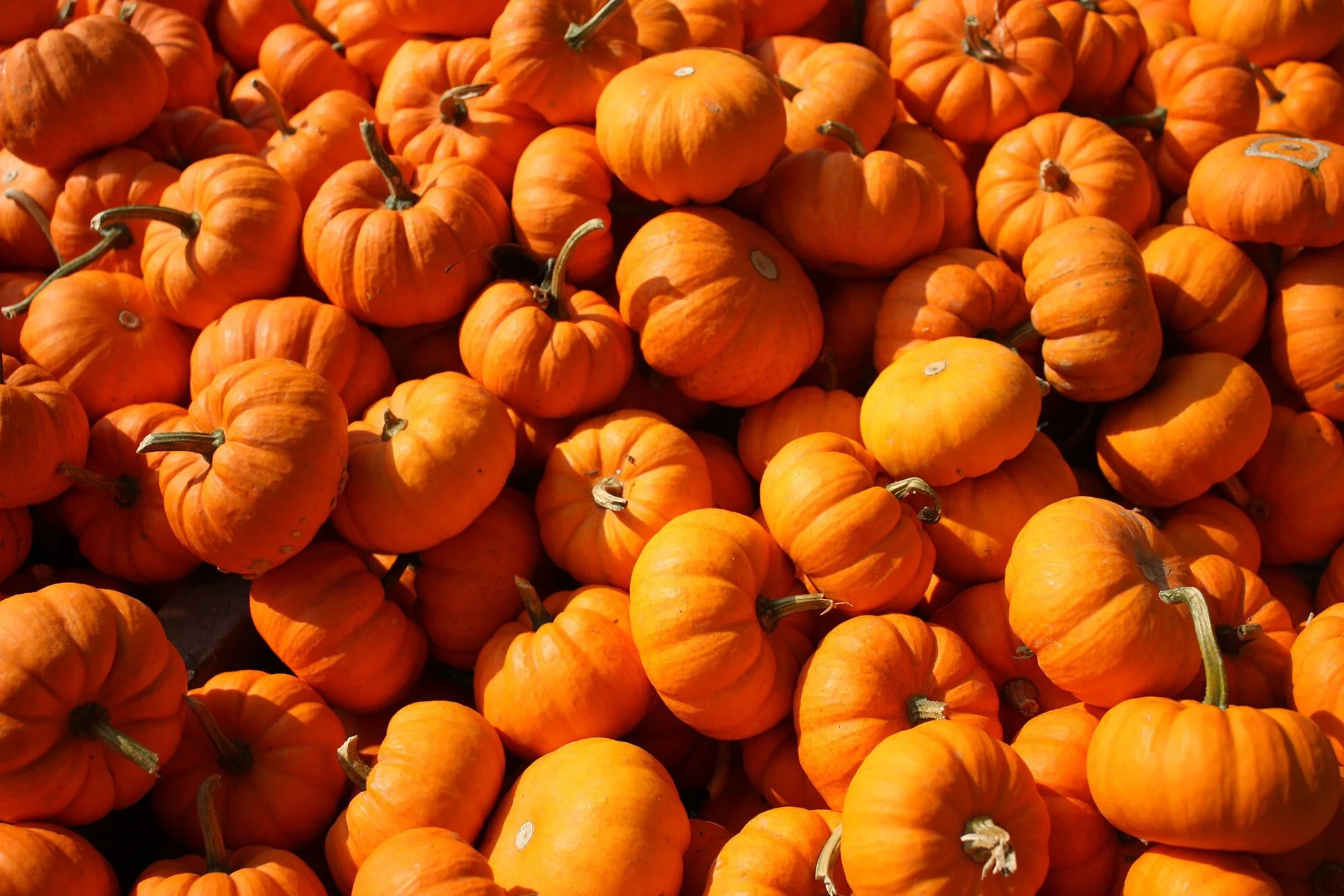
pumpkin
Overview
A pumpkin is a large, round type of winter squash, native to North America, which grows on a vine.
Inside its thick, smooth shell, a pumpkin contains seeds, stringy pulp, and pumpkin flesh. The seeds and flesh can be eaten, as can the flowers, which grow on the vine.
In the US and Canada, pumpkins are often used for decoration during Halloween, and baked into pies at Thanksgiving. However, many edible varieties of pumpkin exist and can be enjoyed in a multitude of preparations. Sometimes other types of winter squash are referred to as pumpkins.
Identification
Pumpkins are typically round with a yellow-orange shell and similarly colored flesh.
Pumpkins range in size and flavor; some varieties, such as sugar pie pumpkins, are small and prized for their sweet, tender flesh, which is ideal for baking.
Some varieties have a different color than the typical bright orange; for example, green or black pumpkins can be found. However, they are usually used for decorative rather than culinary purposes.
Nutrition Info
1 cup of mashed, cooked pumpkin (boiled and drained, without salt) contains approximately 49 calories, 1.8g of protein, 0.2g of fat, 12.0g of carbohydrates, 2.7g of fiber, and 5.1g of sugar.
Pumpkin packs in healthy amounts of vitamin K, A, Cand E as well as potassium and magnesium. Pumpkin is also an excellent source of carotenoids (beta-carotene).
Selection
Canned pumpkin is a convenient and common way to purchase pumpkin. If purchasing canned, look for 100% pure pumpkin with no added ingredients. Choose cans that are not dented and check the expiry date before buying.
If seeking fresh pumpkin, you may consider going straight to the source: the farm, or alternatively, the farmer’s market. This is where you can get better acquainted with the varieties available and even ask the farmer for recommendations based on how you plan to cook the pumpkin.
When choosing a pumpkin, pick one that’s a smaller size: they tend to have tastier flesh. Make sure its stem is attached and the skin is unblemished — avoid pumpkins with any weepy or deeply bruised spots. Look for a dull finish (a shiny shell indicates it was picked too soon).
Storage
Store canned pumpkin as you would any canned product. Store any remaining canned pumpkin in an airtight container (not the can it came in) for up to five days. Alternatively, you can freeze canned pumpkin in an airtight container for up to three months.
Store a whole, fresh pumpkin in a cool, dark place — avoid anywhere humid or damp.
Preparation
One of the easiest and most versatile ways to use pumpkin is to make pumpkin puree. The puree can then be used in sweet or savory preparations.
To make pumpkin puree, simply take a 1 lb pumpkin (such as a sugar pumpkin) and cut into quarters. Meanwhile, heat oven to 350F.
Rub pumpkin flesh with a drizzle of olive oil or coconut oil. Roast on a baking sheet lined with foil, flesh side up. Cook until flesh is soft and can be easily mashed with a fork.
When cooked, remove flesh from the pumpkin shell. Let cool slightly. Puree in a food processor until smooth.
Use in your preferred method — the possibilities are endless. For example: for breakfast, try mixing the pumpkin puree into yogurt and granola, adding it to pancake batter, or including it in a protein shake. For dinner, turn the pumpkin puree into a soup or stew with fresh ginger and nutmeg. Finally, pumpkin makes for delicious desserts: pumpkin tarts, pumpkin cheesecake, even pumpkin ice cream are all tasty ways to enjoy pumpkin.
Tip: Reserve your pumpkin seeds to turn them into a tasty, healthy snack. To prepare toasted pumpkin seeds, heat oven to 250F. Lay seeds out on a baking sheet to create a single flat layer of seeds. (Make sure they are not stacked in a pile or they won’t dry out properly.) Roast, stirring occasionally, for about 1 hour. When done, sprinkle with sea salt and any other spices you like, and enjoy!