

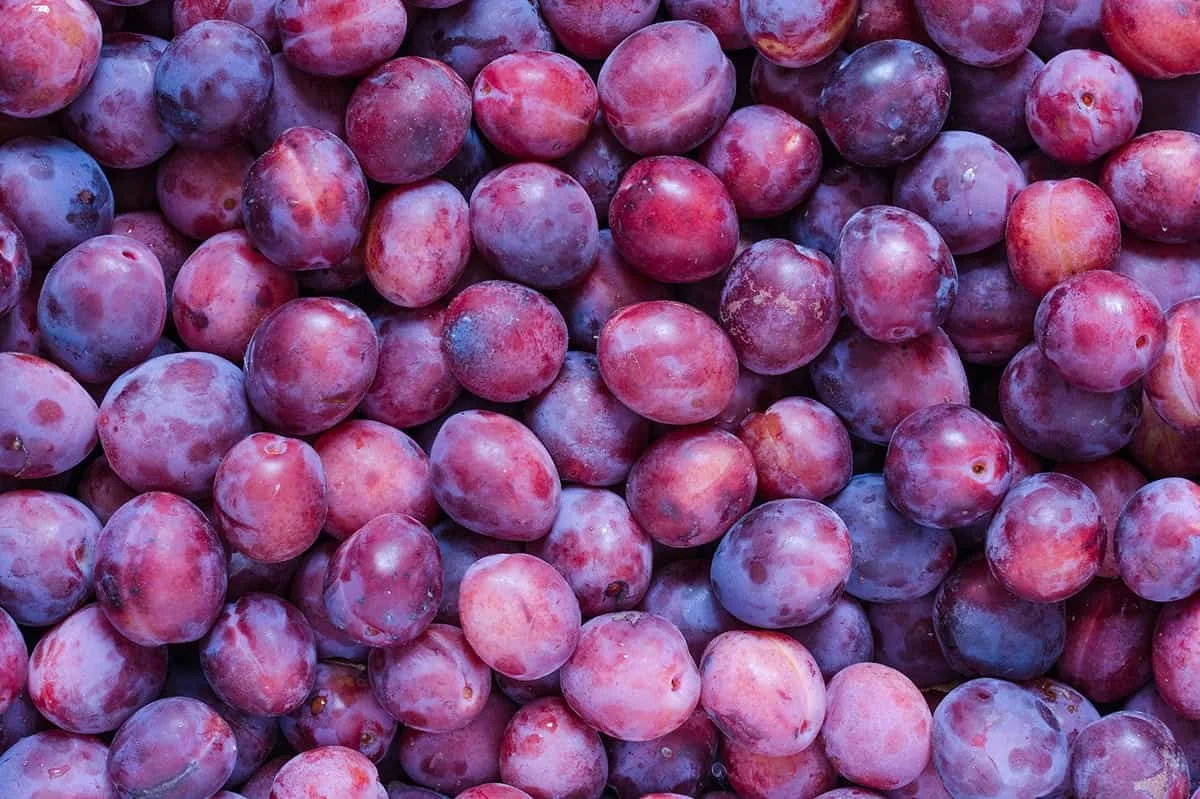
plum
Overview
Plums are a diverse species of fruit that come in a juicy panorama of colors and sizes. They can be as large as a baseball or as small as a cherry. They can be golden like the sun or purple-black like the night sky.
Plums are stone fruits, which means their seeds are encased in a hard shell or pit. Other stone fruits related to plums include peaches, apricots, cherries, and almonds.
Although up to 40 species of plums exist, two main subspecies dominate the commercial market: European plums and Japanese plums (also called Chinese plums). European plums vary greatly in size and color, while Japanese plums tend to be smallish, with a red-tinged yellow skin.
Plums have been cultivated for thousands of years; it is thought to be one of the first fruits domesticated by humans. Plums are grown all over the world, and are typically eaten fresh, dried (as prunes), preserved (with salt or sugar), or made into wine. Currently, China is the biggest producer of plums, followed by Romania, Serbia, and Iran.
Identification
Plums range greatly in all characteristics.
They range in color: The skin of a plum can be grass green, sunny yellow, blushing red, or midnight-black. The color can be even, ombre, or mottled. Most plums are golden on the inside, but some are red or green.
They range in size and shape: Plums can be as small as a cherry or as big as a baseball. Some are a near-perfect sphere while others are more oblong. Some have a cleft running along the length of one side, and others don’t. All will have a little dimple at the top, with or without a stem still attached.
They range in flavor: Most plums are sweet and juicy, with a tartness that tends to concentrate near the skin. However, some are cheek-puckeringly sour. These varieties are usually reserved for jam and are made palatable with the help of lots of sugar.
You may notice that many plums have a waxy, whitish coating. This coating is called “bloom” and is a natural secretion from the fruit. The bloom serves to protect the fruit from absorbing excess water as well as losing water. Usually, the presence of bloom means a plum is fresh and not overhandled. Bloom is harmless and edible. Although some prefer to polish it off, you can eat a plum, bloom and all.
Nutrition Info
One medium-sized plum (about 66g) has 30 calories, 0.5g protein, 0.2g of fat, 7.5g of carbohydrates, 0.9g fiber, and 6.6g sugar. Plums are a good source of vitamin C.
Selection
Plums are available at many larger grocery stores and fruit and vegetable markets year round.
When selecting plums, look for those with deeply-colored, unblemished skin. Give the fruit a gentle squeeze, and a sniff too – a ripe plum will feel slightly firm yet will yield to gentle pressure. It should smell sweet and fruity. Good plums will often feature a bloom – a whitish, waxy coating that occurs naturally to protect the fruit. Avoid plums that feel overly soft or those with brown spots, as they are likely past their prime.
Storage
The storage of your plums depends on how ripe they are when you bought them.
Ripe plums should either be enjoyed right away, or stored in the fridge for a few days. Plums that are not yet ripe can be left at room temperature – just check them daily to make sure they don’t get overripe.
Plums can also be frozen. Simply slice, remove the pit, and store slices in a sealed container or resealable bag in the freezer for up to six months.
Preparation
Plums don’t need any preparation to eat, other than a quick wash.
Just like a juicy peach, plums can be consumed sloppily and joyfully with the help of a napkin or a damp dishcloth. (Count on dribbles! They are juicy!)