

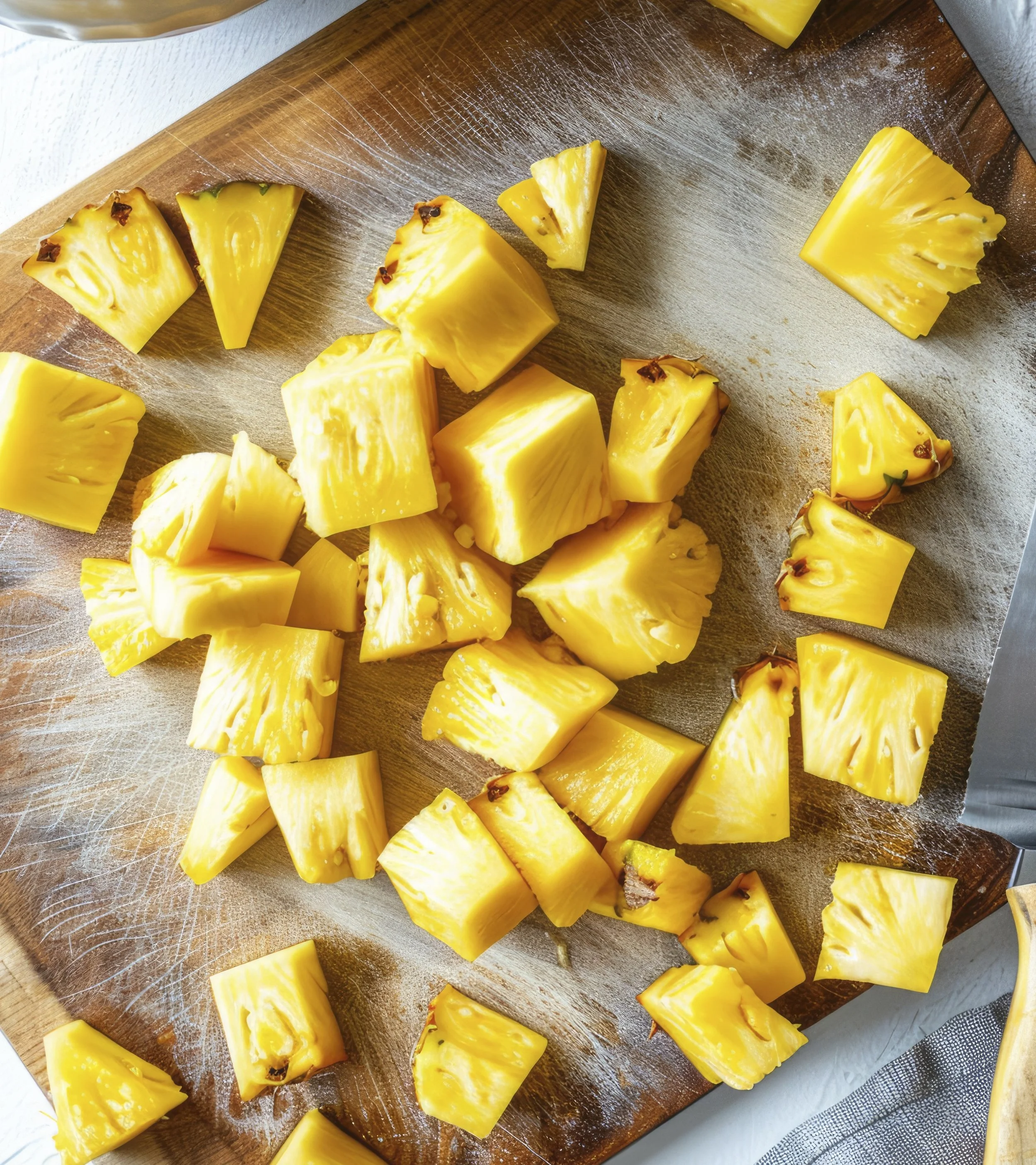
pineapple
Overview
The pineapple is a rather fancy-looking tropical fruit plant. Although they are thought to originate from South America, pineapples are now also cultivated in warmer climates all over the world.
The pineapple is a plant with a slow gestation; it takes about a year for a single fruit to mature. The fruit actually starts off as a clump of purplish blossoms that, over the course of about a year, mature and fuse together to form the fruit of the pineapple, which then grows and turns yellow as it ripens.
Pineapples get their name due to their resemblance to the pine cone (thus, pine apples).
Identification
The pineapple plant is a large shrub with sword-like leaves, with the pineapple fruit growing at its nucleus. The fruit itself has a nubby, yellowish, oblong body topped with a hat of tiered, spiky foliage.
The fruit of a ripe pineapple is very juicy but slightly fibrous, and ranges from pale to bright yellow in color, with a punchy, sweet, and slightly tart taste.
Nutrition Info
One cup of pineapple chunks (about 165g) has 82 calories, 0.9g protein, 21.7g of carbohydrates, 2.3g fiber, 16.3g sugar, and 0.2g of fat. Pineapples are an excellent source of vitamin C, and a good source of manganese, and copper.
Also of nutritional note, raw pineapple contains a unique enzyme called “bromelain”. Bromelain is a type of proteolytic enzyme, which may promote digestion and reduce inflammation in the body.
Selection
Pineapples don’t ripen much further after harvesting. Therefore, pineapples found in stores should already be ripe. A good quality, ripe pineapple will be heavy for its size, and it should smell sweet and fruity near the base. Avoid pineapples that smell musty or fermented, or ones that have dark or soft spots, which may indicate bruising or spoiling.
Pineapples, in addition to their whole fruit form, can also be found canned, frozen, or desiccated in chunks or rings. In order to get the most nutrition and avoid the excess sugar often added to preserve canned or dried pineapple, fresh or frozen forms are recommended.
Storage
Pineapples can be left at room temperature for a day or two after purchasing. If you are not planning to eat the pineapple within this time frame, store it in the fridge for another three to five days, or cut it up into chunks and freeze for up to six months.
Preparation
In order to access the sweet yellow flesh within, a pineapple must be carved.
First, using a large sharp knife, remove the tufted crown of leaves at the top. Then, standing the pineapple firmly on one end, slice off the outer husk in sections, being careful to preserve as much of the central yellow fruit as possible. At this point, you may want to go in with a smaller knife to carve out the small “eyes” of the fruit, which are tough and fibrous. The pineapple also has a fibrous core at the center of the fruit which must be removed. Slice the fruit off around it, then discard the core. Cut the resulting fruit in desired shapes, and consume, or store in the fridge in an airtight container for three to five days.
Tip: The flesh at the base of the pineapple is the sweetest and most tender part of the fruit, so you can save that for yourself, or for another person you like.