

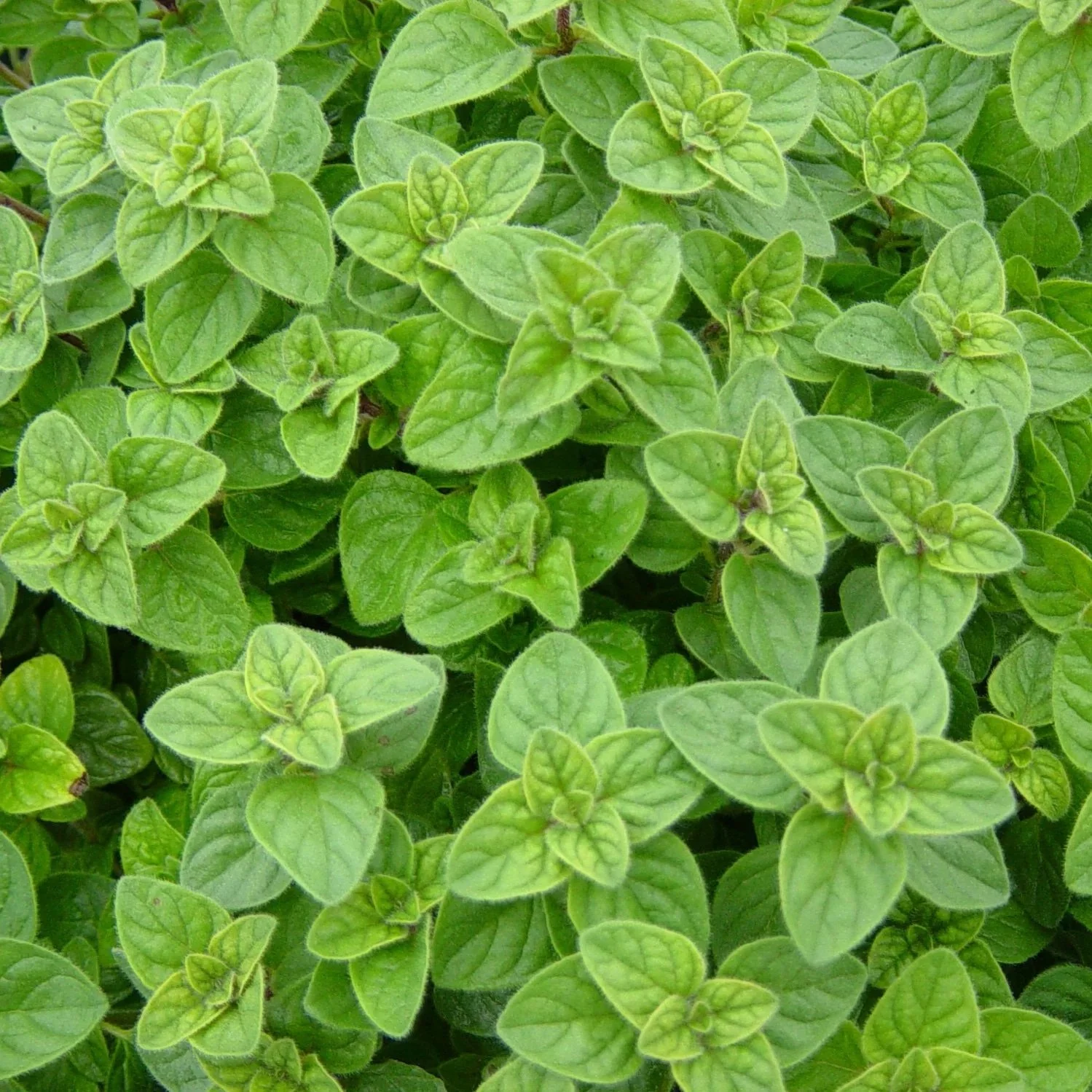
oregano
Overview
Oregano is a popular, potently aromatic herb whose name means “mountain joy”. In many parts of Europe, it is also referred to as sweet marjoram.
Oregano is native to Northern Europe and is often associated with Mediterranean cuisine. Today, it can be grown all over the world, although it prefers warmer climates so will not survive colder seasons.
Not only is oregano an important culinary herb, but it is also of use medicinally. Although it has been used in folk medicine for centuries, it has recently gained popularity in mainstream herbal medicine, primarily for its use as an antimicrobial to kill off infectious bacteria. It can also be prepared as a tea to aid digestion and contains rich amounts of antioxidants.
There are many subspecies of oregano, all ranging in aromatic compounds, making some species sweeter, some more bitter, and some spicier. They all go well on pizza or in pasta sauce.
Identification
For culinary purposes, oregano is typically sold in two ways: fresh or dried.
Fresh oregano grows in clusters of small, slightly fuzzy green leaves on a coarse stem. In its fresh form, it is highly aromatic, pungent, and slightly spicy, with notes of balsam.
Dried oregano looks like dusty green flakes and has a slightly warmer flavor compared to its fresh counterpart. Oregano has an assertive flavor and the dried version can be quite concentrated, so use with a light hand if you are not accustomed to working with it.
Nutrition Info
Oregano, like most spices, is not a significant source of nutrition in the amounts typically consumed. It is however rich in a variety of health-benefiting compounds and antioxidants, so it is worth adding to the diet not just for flavor, but for nutrition too. Specifically, oregano is notable for its carvacrol content, which is a compound known for its antibacterial properties.
Selection
Oregano is widely available and can be found nearly everywhere where food is sold: grocery stores, health food stores, bulk food stores, and spice shops. Dried oregano should be available all year round, whereas fresh oregano may only be available seasonally.
When buying fresh oregano, choose species with firm, woody stems and perky, unblemished leaves. Avoid products whose leaves show signs of yellowing or browning, or those that have begun to sprout flowers. They may be past their prime.
When buying dried oregano, shop at stores with high turnover, and in the case of bulk food stores, covered bins.
If you have the opportunity to sniff the product, do it. Fresh, good quality oregano will smell sharply aromatic and spicy. A dull, dusty, or musty aroma means oregano is past its prime.
Storage
Fresh oregano should be kept well-wrapped in a plastic bag or in an airtight container in the fridge. Stored like this, it will stay fresh and potent for two to three weeks.
Dried oregano should be kept in a sealed container, ideally away from heat and light, such as a closed cupboard or drawer. Stored like this, it will stay potent for about six months. After this time, dried oregano is still perfectly safe to eat, but it will have lost much of its flavor.
Preparation
Fresh oregano leaves should be separated from their woody stem before eating, but other than that, both fresh and dried oregano are ready to use as a delicious culinary herb.
Oregano, fresh or dried, can be added to salad dressings, pasta sauces, pizza, marinades, soups, cooked vegetables, and whole grains/legumes. It goes particularly well with tomatoes, feta cheese, poultry, and other herbs like basil, mint, rosemary, and thyme.