

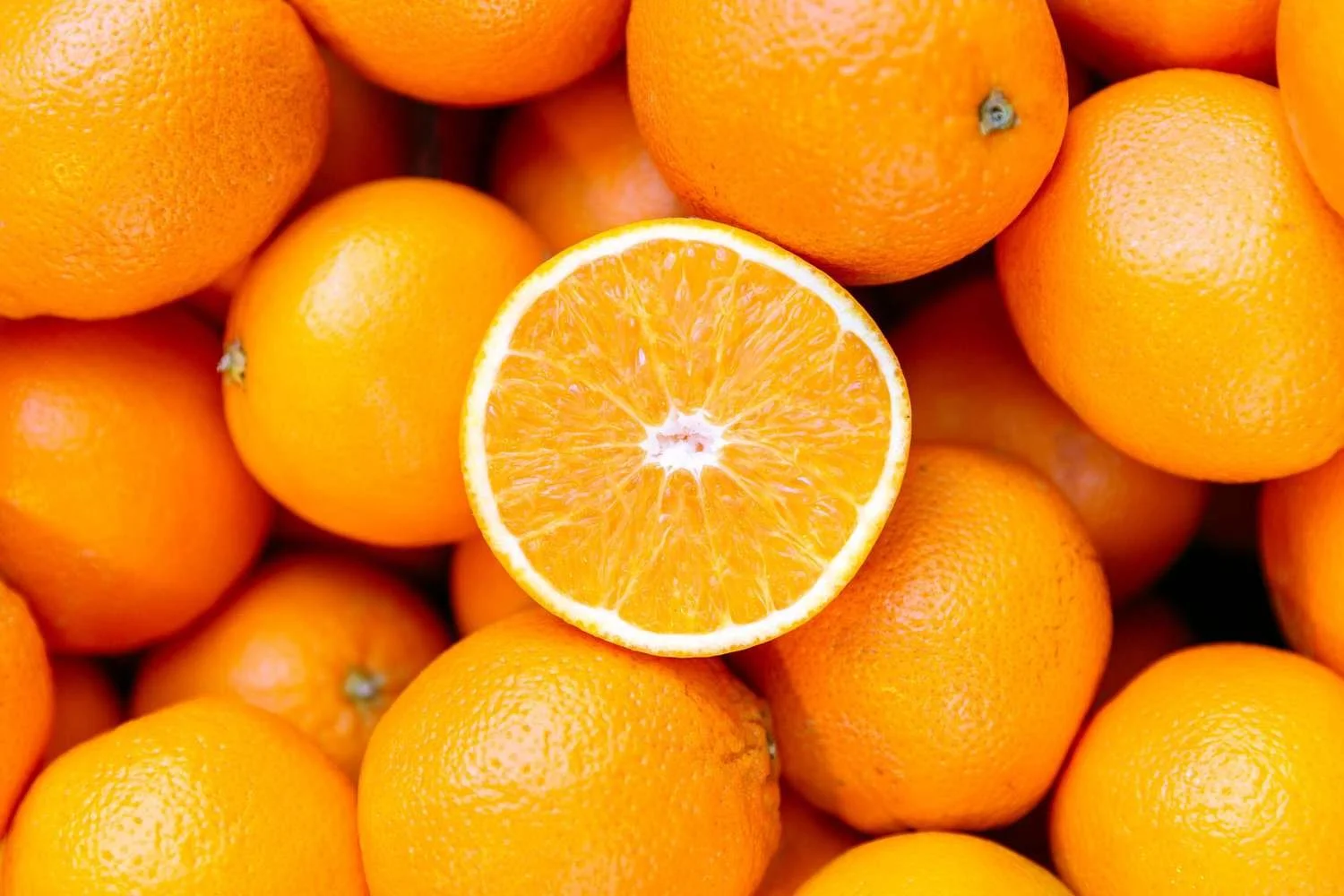
orange
Overview
The sweet orange is a citrus fruit that grows on trees. Oranges have a sweet flavor and juicy flesh.
In the US, oranges come into season during the winter; they are grown in warm-climate states such as Florida, Texas, and California.
Different cultivars exist; the “common orange” is primarily used for juice, while navel oranges are popular for eating. Valencia oranges are a late-season orange, which are enjoyed for juice, cooking, and snacking.
Identification
Oranges are firm and round, typically about the size of a baseball (usually about 2-3 inches in diameter).
They have a thick, bright orange rind. The inner flesh is also bright orange, with a white pith.
Some oranges, such as the Cara Cara variety, have a pink tint to them. Blood oranges are named after the reddish tint to their flesh and juice.
Nutrition Info
One raw navel orange contains about 69 calories, 1.3g of protein, 0.2g of fat, 17.6g of carbohydrates, 3.1g of fiber, and 11.9g of sugar.
Oranges are renowned for their vitamin C content: a single orange provides about 93% of the recommended daily intake. Vitamin C performs many important functions in the body, including providing antioxidant properties that may help fight off disease.
Oranges are also good sources of vitamin A, fiber, potassium, and choline. Much of their nutrition is contained in the white pith and the orange flesh, so eating a whole orange is a better nutritional choice than drinking orange juice.
Selection
Choose oranges that are firm, smooth skinned, and feel heavy for their size (this signals a high juice content). Avoid oranges that have any mushy or moldy spots.
Oranges do not have to be uniform in color to be good. Keep in mind that the shade of skin will reflect the variety: blood oranges, for example, tend to have a reddish tint that can be seen in the peel, as well as the flesh.
Storage
The best way to store oranges is in the refrigerator. Keep them loose; don’t seal them in a plastic bag or they could develop mold. Whole, fresh oranges should last for about two weeks this way.
If you choose to pre-slice or juice your oranges, the cut flesh and/or juice will last for two to three days in a sealed container in your fridge.
Preparation
Even though you’re not eating the peel, it’s best to wash oranges before cutting into them. This way you avoid transferring any outer dirt into the cut flesh.
There are a few ways to prepare an orange for eating or cooking:
Orange slices. Cut the orange in half, then quarter each half. You can cut each of those quarters into smaller slices if you prefer.
Peel and section. This works best for thin-skinned oranges. Simply peel off the rind, then section the orange with your fingers, letting each section naturally separate.
Grapefruit style. Half the orange, then use a paring knife to score the flesh away from the white pith. This way you will separate small sections of flesh which can be eaten grapefruit-style, with a spoon.
Chef style. Cut away the peel and pith with a paring knife, then you can segment, slice or dice the orange flesh as needed for your recipe or personal preference. Avoid any pith or white separation points for a smooth texture and appearance.
If you wish to make fresh-squeezed orange juice, you can use an electric juicing machine, or simply use a plain juicer and squeeze the juice by hand. Depending on how many glasses of juice you want, you may need a lot of oranges!
If you’re just looking to add a hit of fresh orange juice to a recipe, try this chef trick: hold a cut orange over the dish that needs the juice. In your free (bottom) hand, hold your fingers just slightly apart. Squeeze the juice into your bottom hand, letting the juice fall through your fingers into the dish, while catching the seeds in your palm.
While oranges are most commonly enjoyed as juice or a snack, you can cook and bake with them too. Try roasting chicken breasts with slices of orange. Add chopped oranges to a roasted beet salad. Spike your marinades or sauces with fresh orange juice and zest. Anything that could benefit from a sweet, slightly acidic hit of flavor, can probably appreciate a bit of orange.
Don’t throw out that orange peel! It’s great for orange zest. The zest has a slightly sweet, bitter, and acidic quality. In other words, it provides a great flavor boost. To get orange zest, first wash and dry the orange. Then take a fine rasp-style grater (such as a Microplane) to the peel. Zest is best soon after it’s made, but you can keep it in a sealed container in the fridge for a day or two, or you can keep it in a freezer bag in your freezer for weeks. Zest is a great addition to baked goods, meat marinades, grilled fish, compound butters, or even as a topping for yogurt or creamy desserts.