

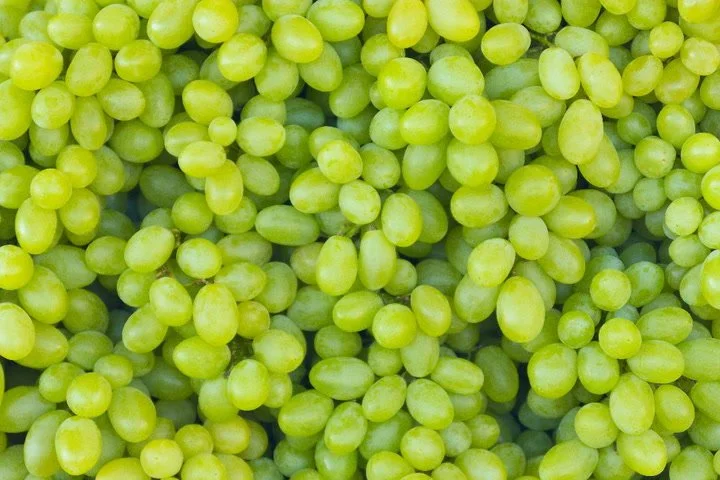
grape
Overview
Grapes are the fruiting berries of the Vitis plant species. Vitis is a deciduous, woody botanical, which grows clusters of grapes on its vines.
Grapes are enjoyed as raw fruit, and in their many transformations: notably wine, juice, jams and jellies, vinegar, grapeseed oil, and in their dried form, raisins.
The type of grapes used for eating and snacking are known as “table grapes.” One of the most common varieties of table grapes is the Thompson Seedless: a plump, tart-sweet seedless grape available in both red and green variations.
While grapes are available year round, true grape season is fall, when a wide variety of grapes are fresh and flavorful.
There are notable differences among the different varieties of grapes: Some, like concord, have thick skins, seeds, and a chewy flesh that gives way to a burst of tangy juice. Others, like champagne grapes, are lighter, sweeter, with thin skin and a delicate, sweet flavor.
Identification
Grapes grow in clusters, and this is usually how you’ll find them: in bunches, connected by their own wiry stems.
Grapes vary in size, shape and color, depending on the variety. In general, grapes are small and round (in some cases oblong), ranging in color from translucent green to purple to blue-black.
Nutrition Info
Approximately 1 cup of Thompson Seedless grapes contains 104 calories, 1.1g of protein, 0.2g of fat, 27.3g of carbohydrates, 1.4g of fiber, and 23.4g of sugar.
Grapes contain an antioxidant in the form of the phytochemical compound Resveratrol, which has been found helpful in the prevention of certain types of cancers, heart disease, and stroke.
Grapes also contain copper, iron, and manganese, and they are a good source of vitamin C and vitamin A.
Selection
Look for grapes that are plump and brightly colored, without blemishes or broken skin.
Avoid grapes with signs of mold but keep in mind that many varieties naturally have a soft white film on them; this is the grapes’ natural protective coating and not a sign of mold. If you notice thick mold, stem mold, or other questionable substances on the grapes, do not buy them.
Storage
Grapes should be wrapped loosely in an opened plastic or paper bag and stored in the refrigerator. This way, fresh grapes should last for up to a week.
Preparation
Wash grapes just before eating (washing them prior to that will decrease their lifespan). To wash grapes, rinse them in a colander under cool running water.
To get the best flavor from your grapes, let them come to room temperature before snacking.
Grapes can be a tasty snack on their own, or added to a platter of cheese and nuts. Get creative and you can add grapes to savory dishes like braised short ribs, duck confit, or a warm goat cheese salad. Grapes can also be transformed into jams and jellies, which in turn can be added to pies, tarts, or simply spread on toast.