

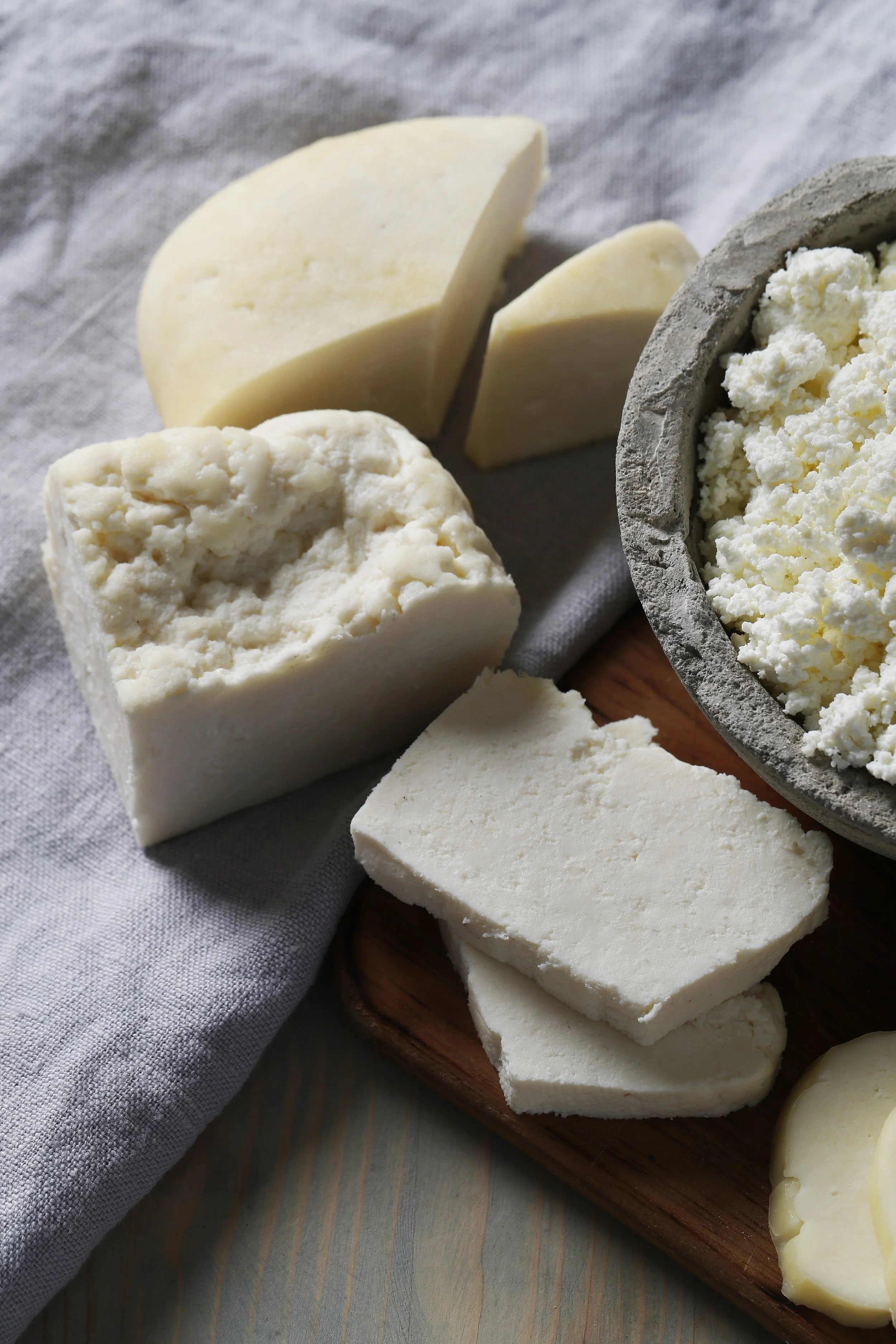
goat cheese
Overview
Goat cheese, also known as chèvre, is a cheese made from goat's milk. It is celebrated for its distinctive tangy flavor and creamy texture, making it a popular choice for a variety of dishes. Goat cheese can range from soft and spreadable to firm and crumbly, depending on its aging process and production methods.
Goat cheese has been made for thousands of years and is known for its versatility in both savory and sweet dishes. Unlike many cheeses, it tends to be easier to digest for some people, especially those who are sensitive to cow's milk.
Here’s how it’s made:
First, goat's milk is pasteurized and cooled. A starter culture of bacteria is added to the milk, which ferments the lactose into lactic acid. Rennet is then added to coagulate the milk, forming curds. The curds are cut, drained, and gently stirred to expel the whey.
The cheese may be aged for a short period, or for several weeks, depending on the desired texture and flavor. During aging, the cheese develops a rind and a firmer texture. Some goat cheeses are flavored with herbs, spices, or other ingredients before aging.
Identification
Goat cheese is typically sold in rounds, logs, or crumbled form. It has a white to off-white color and a soft, creamy texture. The cheese can have a smooth surface or a natural rind, depending on its aging process.
Goat cheese has a distinct tangy, earthy flavor that can range from mild and creamy to sharp and crumbly. It often has a slightly grainy texture when crumbled, and a smooth, spreadable consistency when fresh.
Nutrition Info
One ounce (28g) of goat cheese contains approximately 75 calories, 5g of protein, 6g of fat, and 0g of carbohydrates. Goat cheese is a good source of calcium, phosphorus, and vitamin B12. It also contains beneficial fatty acids and is often easier to digest for those with lactose intolerance.
Selection
Goat cheese can be found in the cheese section of most grocery stores, often in the specialty cheese area. Here are some tips for selecting goat cheese:
Type and Texture: Choose based on your preference for texture and flavor. Fresh goat cheese is soft and creamy, while aged varieties are firmer and crumblier.
Packaging: Ensure the packaging is intact and free from signs of spoilage. Fresh goat cheese is often sold in vacuum-sealed packages, while aged varieties may be wrapped in wax paper or plastic.
Ingredients: Look for goat cheese with minimal additives. The best cheese will have a simple ingredient list, typically including goat's milk, bacterial cultures, rennet, and salt.
Storage
Goat cheese should be stored in the refrigerator. Fresh goat cheese should be kept in its original packaging or an airtight container to maintain its moisture and flavor. Aged goat cheese should also be wrapped in wax paper or parchment paper and stored in a breathable container.
Fresh goat cheese can last for about 1-2 weeks in the refrigerator, while aged goat cheese can last for several weeks. If the cheese develops mold, it should be discarded, as this can affect the flavor and safety of the cheese.
Preparation
Goat cheese is versatile and can be used in a variety of dishes. Here are some popular ways to enjoy it:
Salads: Crumble goat cheese over salads for a creamy texture and tangy flavor.
Appetizers: Spread fresh goat cheese on toast or crackers and top with herbs, honey, or fruit preserves.
Cooking: Incorporate goat cheese into recipes for omelets, pasta dishes, and baked goods.
Desserts: Use goat cheese in desserts such as cheesecake or mixed with fruit for a sweet treat.
Goat cheese pairs well with ingredients like honey, nuts, fresh herbs, fruits (such as figs or pears), and balsamic vinegar. Its unique flavor and creamy texture make it a delightful addition to both savory and sweet dishes.