

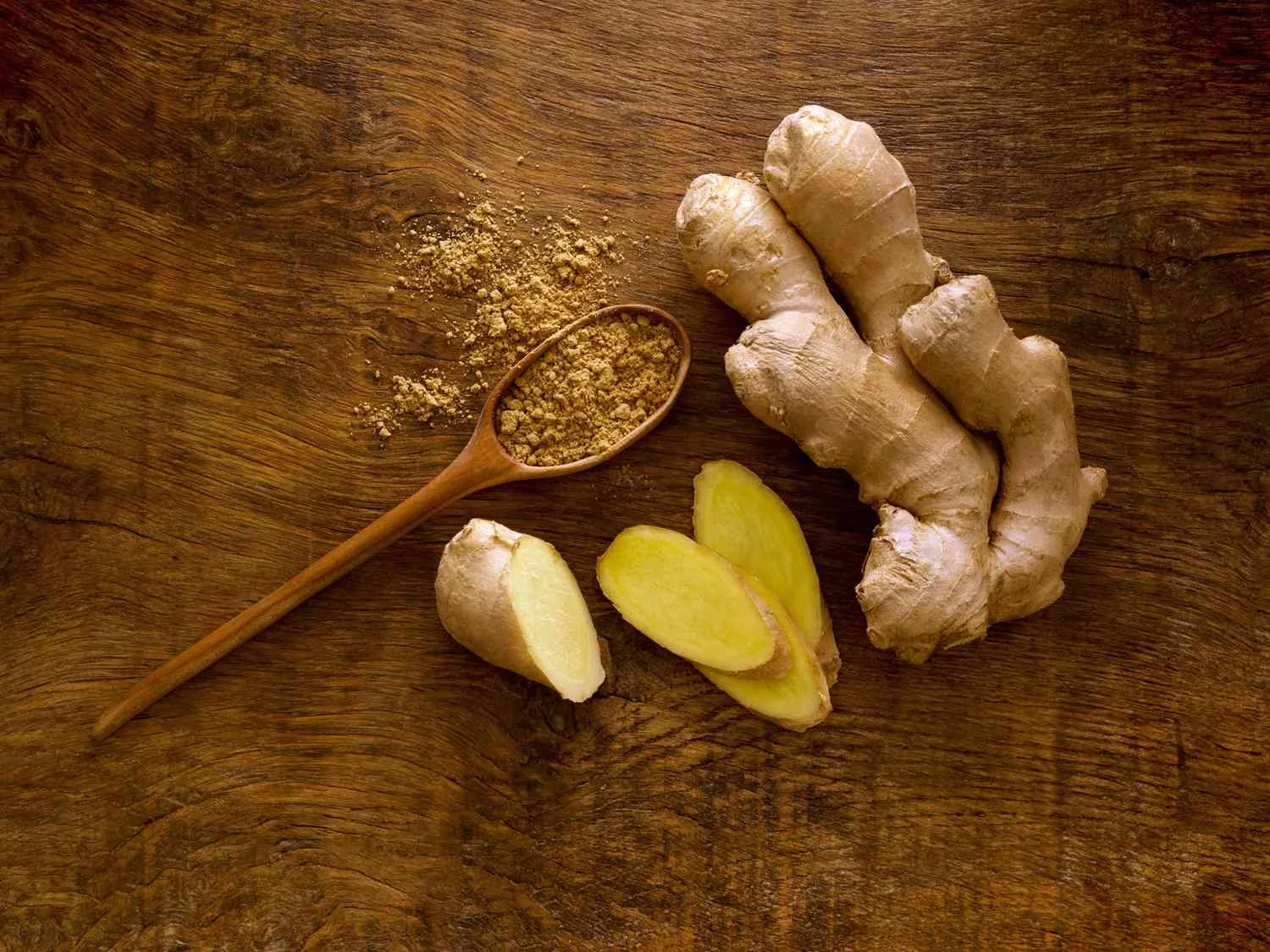
ginger
Overview
Ginger is a spice with attitude.
This humble-looking knobby root has a spicy bite – eaten raw and unadulterated, its heat will rise quickly from the mouth to the nostrils, clearing everything in its path.
Despite this fiery property, ginger is actually a potent anti-inflammatory agent and is used in herbal medicine to treat chronic pain and perhaps most famously, nausea of all kinds, whether it be due to pregnancy, motion sickness, or infection.
Ginger is a wildly popular spice in Asia. You will find it minced into curries, baked goods, and chai in India; whisked together with garlic, scallions, and soy sauce in China; pounded into a paste with lemongrass and coconut in Thailand; and pickled, pink, and served as a condiment alongside sushi and other dishes in Japan.
In the West, we like our ginger like we like most things: with sugar (for example in ginger ale or in ginger biscuits).
Ginger is related to turmeric and galangal, which are also both knobby roots with pungent flavors. If left to mature and blossom, you will see that while the root is homely, the above-ground parts are rather showy and beautiful; Ginger is often used as an ornamental plant in warm climates.
Ginger is thought to have originated in India, which is still the world’s primary producer.
Identification
Ginger can be found either as a fresh root or as a dried powder.
The beige colored root is fun and knobby – each root has a different configuration of bulbs and nubs and shafts, all branching off each other in different directions. The root has skin that can be thin if the root is young or slightly tough if the root is older. In all cases, the skin is edible and is where much of the flavor lies. The interior is pale yellow, tough, and fibrous.
Dried ginger is sand colored and fine. So fine, in fact, that it is easy to accidentally inhale a wayward cloud of ginger powder, which will probably cause a mild coughing fit.
Both forms have a similar spicy, fragrant, and slightly sweet flavor, but the root tends to have a fresher, brighter flavor while the dried powder is more woody and earthy tasting. The heat that ginger brings is sharp and fast but tends not to linger like a hot chile.
Nutrition Info
Like most spices, ginger is not a significant source of nutrition in the amounts typically consumed. It is however, proportionately very high in manganese.
Ginger also contains some health-benefiting compounds that may help to promote digestion and reduce inflammation in the body, so consider it not just for flavor, but for physical wellbeing too.
Selection
Ginger is available either as a fresh root or as a dried powder and can be found at most grocery stores, health food stores, bulk food stores, fruit and vegetable markets, and spice shops.
When purchasing the dried powder, shop at stores with high turnover, and in the case of bulk food stores, covered bins. Dried ginger doesn’t go “bad” but it does lose potency. Make sure the ginger you are purchasing still has a robust spicy smell.
When purchasing the fresh root, look for roots that are heavy for their size and look firm with skin that is taught and slightly shiny. Avoid roots that look withered, very dull, or that are covered in nicks and blemishes.
Ginger is also available in a variety of other forms: puréed, pickled, candied, and others. While these forms are fine for convenience, they also may contain extra preservatives, coloring agents, or sugar.
Storage
Store ginger powder in a sealed container at room temperature, ideally away from heat and light, such as a closed cupboard or drawer. Assuming proper storage, ground ginger has a shelf life of about six months. After this time, ginger is still perfectly safe to eat, but it will have lost much of its flavor.
Fresh ginger root should be kept in the crisper drawer of the fridge, where it will stay fresh for two to three weeks. It can also be kept in the freezer for up to six months. Store it whole and slice off a knob as needed. Wrap it well to prevent freezer burn.
Preparation
Whether you have the dried powder or the fresh root, ginger is a delicious addition to warm beverages, curries, soups, smoothies, and porridges.
The dried powder can be sprinkled into foods directly, while the root needs to be sliced, grated, or minced before using.
Use a sharp knife to slice of a knob of the root and either cut it into very fine slices, mince it, or grate it. Some people prefer to peel it first, however, the skin is perfectly edible and is also where much of the flavor lives.