

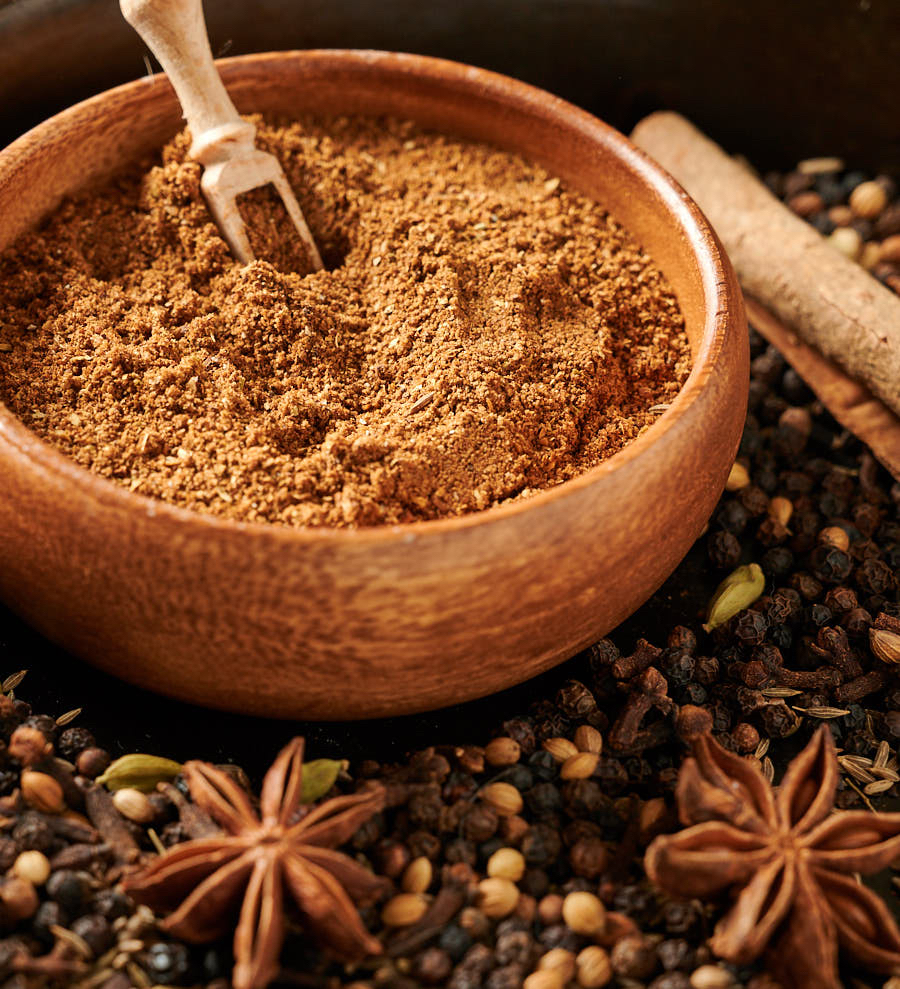
garam masala
Overview
Garam masala is a slightly sweet, peppery, and pungent blend of spices. In Urdu, garam means “hot” and masala means “mix of spices”.
Many cultures around the world have blends of herbs or spices that are staples in their regional kitchens: France has herbes de Provence, Latin America has Adobo, China has Chinese five spice, and India and Pakistan have garam masala.
Traditional garam masala recipes nearly always includes peppercorns, cloves, cinnamon, cardamom, and cumin. However, it may also include nutmeg, coriander, star anise, and/or dried chilis. Less commonly it may contain turmeric, saffron or fennel, or even ground nuts or garlic and onions.
There are many permutations of garam masala, and recipes will vary according to region and personal palate.
Garam masala is a versatile seasoning and is used in both sweet (such as in rice pudding) and savoury (such as in lentil dal) preparations.
Identification
Garam masala is a combination of ground spices, and typically has a golden brown color. It is highly aromatic, and depending on what spices are used in a particular garam masala recipe, it will taste and smell sweet, spicy, pungent, and sometimes even slightly floral with notes of licorice.
Nutrition Info
Garam masala, in the amounts typically consumed, is not a significant source of any nutrients.
However, like many herbs and spices, garam masala does add nutrition to a meal in a few different ways.
First, many of the spices included in garam masala are high in phenolic compounds with powerful antioxidant activity. Cloves in particular are extremely high in antioxidants. Other spices, such as cinnamon, can help balance blood sugar. Still others, such as cumin and cardamom, belong to a class of plants called “carminatives”, which are used to enhance digestion and reduce gas and bloating.
Like most other spices, garam masala doesn’t necessarily “count” towards your macronutrient or micronutrient tallies, although it still offers health benefits, and of course flavor.
Selection
Garam masala can be found already mixed in glass jars, sachets, or loose in bulk bins. However you choose to purchase it, shop at stores with a high turnover. Spices that stay on the shelves for long periods of time lose flavor and potency. Fresh garam masala should be highly aromatic, peaking with sweet and spicy notes.
You can also easily make your own garam masala mix, using either pre-ground spices, or by grinding whole spices yourself with a mortar and pestle or in a coffee mill.
Here is a basic recipe:
2 teaspoons of ground cumin
1 ½ teaspoons of ground black pepper
1 ½ teaspoons of ground cardamom
1 teaspoon ground cinnamon
½ teaspoon ground cloves
½ teaspoon of ground nutmeg
Mix all spices together and store in an airtight, preferably glass, container.
Storage
Keep garam masala in a sealed container at room temperature, ideally away from heat and light, such as a closed cupboard or drawer away from the oven.
Garam masala won’t so much “go bad” as it will lose flavor, which occurs after about six to eight months.
Preparation
Garam masala is delicious sprinkled over roasted vegetables, lentil stews, or cooked whole grains, or used in meat rubs or marinades.
When using it in soups or stews, culinary experts suggest adding garam masala during the last phase of cooking, as it can become bitter if stewed too long.