

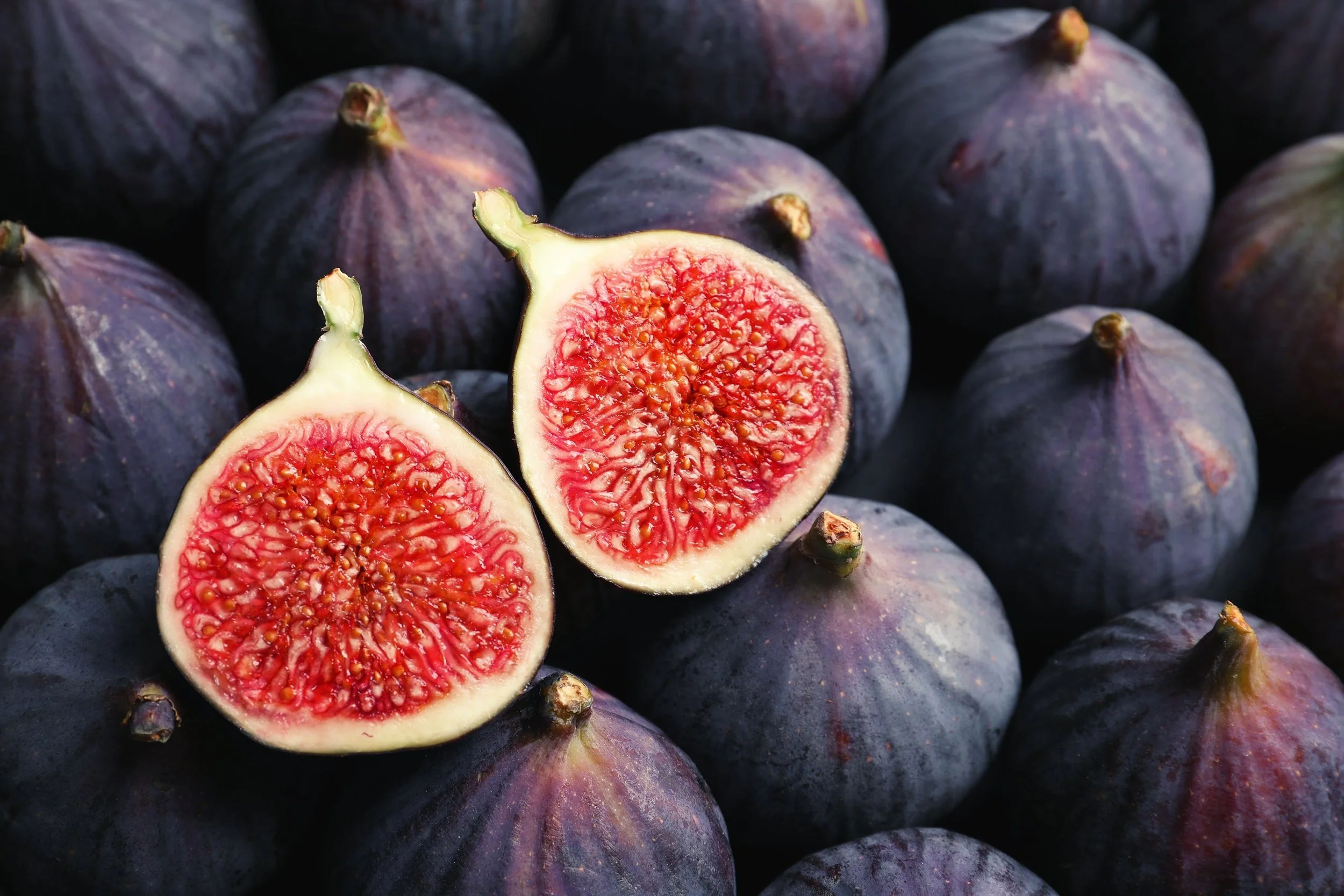
fig
Overview
The common fig is a species of flowering plant grown for its edible fruit. Technically, the fig is not a fruit but an inverted flower. It is grown in temperate climates, most notably in the Mediterranean.
Many cultivars of figs exist. Black Mission figs are a popular variety. Dried, packaged figs are usually available year-round, but fresh figs come into season throughout early summer and late fall.
Identification
Figs typically have a plump, teardrop shape with a rounded bottom and short stem on top. The most common varieties, like Mission figs, are mostly deep purple in color. The inside of the fig is pink and fleshy looking, made up of tiny seeds.
Nutrition Info
One medium fig (about 50g), contains about 37 calories, 0.4g of protein, 0.2g of fat, 9.6g of carbohydrates, 1.4g of fiber, and 8.1g of sugar.
Figs are rich in fiber, and they also contain plenty of calcium (18mg per one medium fig). Mission figs are dense in a number of minerals and vitamins including magnesium, potassium, and vitamin K.
Selection
Fresh figs should feel plump and have a gentle give when pressed. Small cracks or wrinkles are acceptable, but avoid figs that are oozy or have bruised and broken skin. Fresh figs should have a fragrant scent.
Dried figs are usually sold in pre-wrapped packages. Check the expiry date on the package for freshness. If buying bulk, check for mold or discolouration. Dried figs should smell sweet not sour.
Storage
Fresh figs are fragile and will spoil quickly. They taste best at room temperature but can be stored in the fridge to extend their lifespan slightly. Generally they should be eaten within two or three days.
Figs can develop mold if they sit too long in moist conditions. To avoid this, keep them in a basket or container with proper air circulation and ensure there is space between each fig.
Dried figs can be kept for up to 6 months, well-wrapped. Keep dried figs in a sealed container or in their original packaging, in a cool dark place.
Preparation
The entire fig is edible, including its tender skin and the inner flesh, which is filled with tiny edible seeds.
Figs can be eaten out of hand. They are also frequently used in desserts, baked into cookies or tarts, or made into sauces, jams or compotes.
If preparing dried figs, chop with a sharp knife, rinsing the knife occasionally if it gets too sticky.
Tip: To make dried figs easier to slice, put them in the freezer for an hour before preparing them. This works well if chopping a large portion of dried figs for baking.
Fresh figs can be used in savory dishes or snacks. Preparations include grilling or roasting the figs, which caramelizes the fig’s sugars and accentuates its rich, sweet, and savory flavors.
Try adding figs to a cheese board: Add fresh figs, whole or sliced, to a selection of salty cured meats such as prosciutto, cheeses such as brie and blue, a drizzle of honey, and some pistachios and walnuts. The mix of salty, sweet flavours, and creamy and crunchy textures will accentuate the figs’ flavours.