

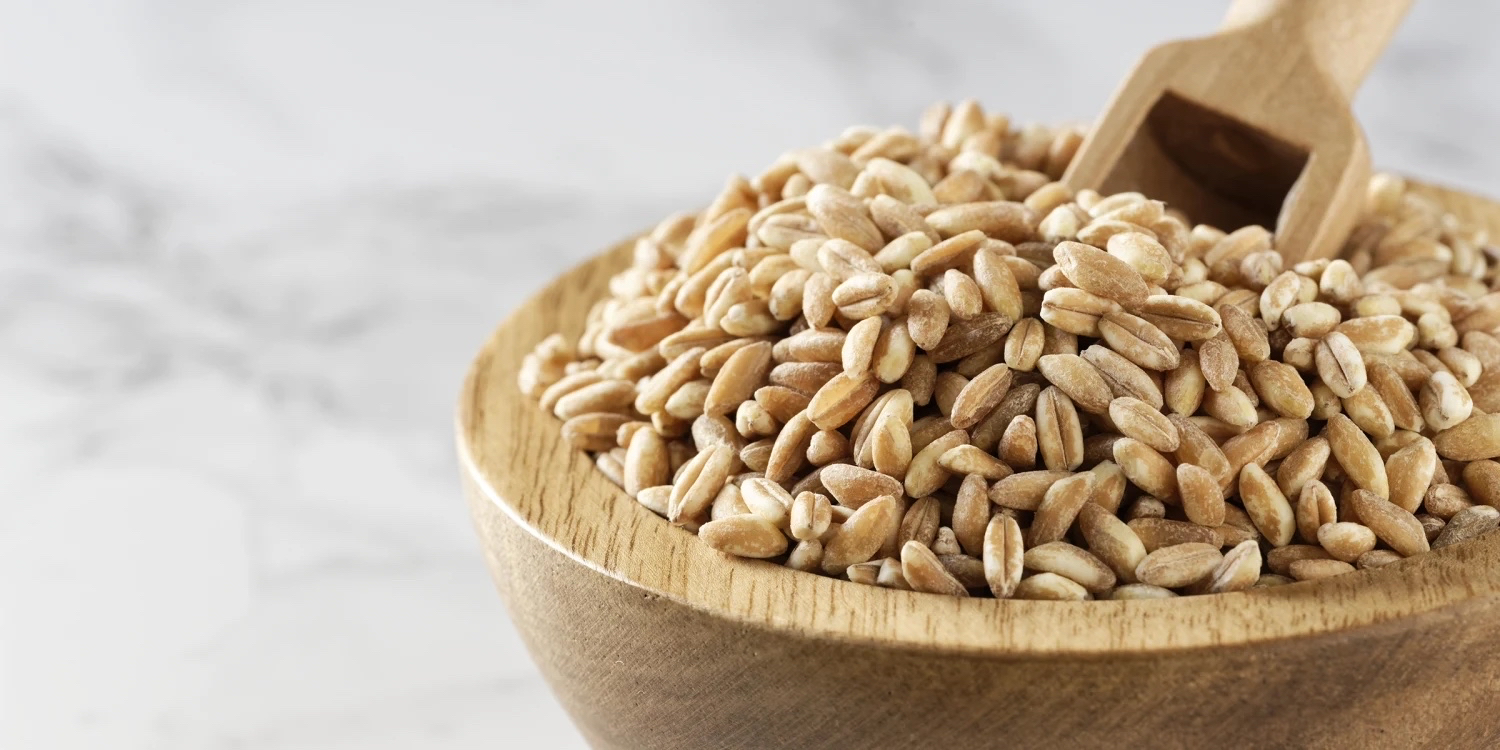
farro
Overview
Farro is a tasty and nutritious ancient grain—but beyond that, its definition gets murky. The term is used interchangeably for three different species of wheat: spelt, emmer, and einkorn. These are all hulled species of wheat, meaning they can’t be threshed.
In Italy, the word farro refers in particular to emmer, also called “true” farro. The grain is sold dried, and cooked in water or broth until it is soft yet crunchy. It can be eaten plain but is more often added to salads, soups, or other dishes. It can also be treated like pasta. Renowned for its delicious, nutty flavor, farro is high in protein, rich in vitamins, relatively low in carbohydrates, and also relatively low in calories.
Like barley, farro comes pearled or semi-pearled. The semi-pearled version includes more fiber and nutrient-rich bran than the pearled version, which has no bran.
You can also sometimes buy farro whole; the whole version needs overnight soaking before cooking.
Finally, it is also possible to buy or make farro (or emmer) flour.
As a type of wheat, farro is not suitable for gluten-free diets.
Identification
Although you’re not likely to have to identify farro in the field, true farro, (Latin name Triticum dicoccum) has two spikes on its husk. It is a tetraploid, meaning it’s a cross of two ancient diploid grasses. Unlike common modern wheats, which tend to be polyploids with six or more chromosome sets, it has only four.
Individual grains are light brown to medium brown. They have an elongated shape and measure about 6 to 8 mm.
Nutrition Info
One quarter cup of uncooked emmer wheat or farro contains 150 calories, 1g fat, 32g carbohydrates, 6g protein, and 3g of fiber, or 11% of your daily requirements. It is high in the minerals iron and calcium, and is an excellent source of vitamin A, vitamin C, vitamin E, and the B vitamins.
Selection
You can find ready-to-cook farro in Italian groceries, health food stores, and sometimes in regular groceries. But shopping for this grain can be tricky. This is partly due to the controversy about nomenclature.
Also, even once you find true farro, it can be difficult to know whether you’re buying the whole, pearled, or the semi-pearled variety. The information on packages is often confusing.
One thing is certain: in any of its guises, farro is a small brown grain with a nutty taste that cooks up nicely al dente. And when all is said and done, if you follow the directions on the package, whichever variety you buy will taste delicious.
Storage
Keep farro grain in a cool, dry place in a container that allows it to breath. You can store it for about 18 months.
Emmer flour should be kept in an airtight container. It will last about one month in the pantry and two to three months in the refrigerator.
After cooking, you can store farro in your fridge for a couple of days.
Preparation
Always rinse farro with cold water and drain well before cooking.
To cook whole grain, bring two parts water and one part grain to a boil, and boil for 30 minutes for an al dente texture, or longer for a softer consistency.
You can also use a rice cooker to cook farro. Try the brown rice setting. A crockpot is another option, although it will take about 3 to 4 hours to cook using this method.
Using the risotto method of cooking produces a delicious flavor. Sauté an onion in some olive oil, add the farro, stir it around for a few minutes, and only then add the liquid and salt. Cook for about 30 minutes, stirring frequently. You can then drain and dress the farro and use it in other preparations if you wish, or eat it as a side dish.
Raw grains may be eaten whole as a breakfast food if soaked overnight.
Whole farro may be flaked and used as a breakfast cereal or added to baked goods. You can also grind your own flour, but don’t try to do so in a coffee grinder, which isn’t strong enough for the kernels.
Another option is sprouting the whole grain and adding the sprouts to salads and sandwiches.