

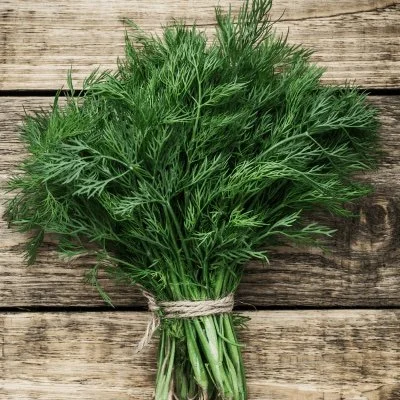
dill
Overview
Dill is a culinary herb with wispy, thread-like leaves that branch out in all directions. It is in the Apiaceae family, which also includes celery, carrots, and parsley.
Dill is native to Eastern Europe and is a common ingredient in many traditional dishes from these regions. Dill appears in many Eastern European dishes, for example, the iconic cold beet soup, borscht. In North America, dill is often associated with pickles, as it is a traditional component of the aromatic brine that turns cucumbers into pickles. It also pairs well with fish and mild, creamy cheeses.
Dill grows in temperate climates and loves the sun. If left to mature, the dill plant will sprout small yellow flowers that will eventually turn to seed. These seeds are also used as a culinary spice and have a very potent aromatic flavor similar to caraway seeds.
In traditional medicine, both dill weed and dill seed are used to treat indigestion.
Identification
Dill weed is a fun-looking plant with feathery, thread-like green leaves that branch out in all directions. If left to mature, the plant will sprout an umbrella of tiny yellow flowers that will eventually turn to seed.
Fresh dill is highly aromatic and has a strong grassy flavor with notes of anise and parsley.
Dill weed can also be found as a dried herb. Dried dill looks like a bunch of green splinters, and has a slightly more mellow, earthy flavor compared to its fresh counterpart.
Dill seed is also used culinarily and has a very potent aromatic flavor, similar to caraway seeds.
Nutrition Info
One cup of fresh dill weed (about 9g) has 4 calories, 0.3g protein, 0.1g of fat, 0.6g of carbohydrates, 0.2g fiber, and no sugar. Although dill is rarely consumed in large amounts, it is proportionately rich in vitamin C, manganese, iron, and folate (vitamin B9).
Selection
Fresh dill is widely available and can be found at most large grocery stores and fruit and vegetable markets.
When selecting dill, try to find the fresh herb over the dried herb, as it is more fragrant and delicious.
Look for bunches that are green and feathery with fairly upright stems. Dill wilts quickly after harvesting, so a little drooping is ok. Avoid bunches that look brown, slimy, or exceptionally floppy.
If choosing dried dill, shop at stores with high product turnover. Dried dill loses aroma and potency quickly. For this reason, see if you can smell the dried dill before you purchase it. Good quality dried dill will still smell potent and aromatic. Avoid dill that has little smell or a dusty color, as it is probably past its prime.
Dill seeds have a longer shelf like but the same rules still apply. In short, if it smells fragrant and looks good, it probably is good.
Storage
Fresh dill is fairly delicate and may only last two to three days in the fridge. The best way to store it is to place it stems down into a glass of water and cover its leaves with a plastic bag. This will ensure that the leaves stay relatively turgid and protected from damage from the cold.
Like all dried herbs and spices, dried dill weed or seeds should be stored in an airtight container in a cool, dry, and dark environment. Stored like this, they will last three to four months.
Preparation
Although fresh dill is rarely eaten solo, technically it doesn’t need any special preparation (other than a quick rinse) to be eaten.
However, fresh dill really shines when chopped finely and added to salads, cooked vegetables, sandwiches, pasta, and fish. It pairs particularly well with salmon and soft, mild cheeses.