

date
Overview
Dates are the sweet fruit of date palm trees.
Identification
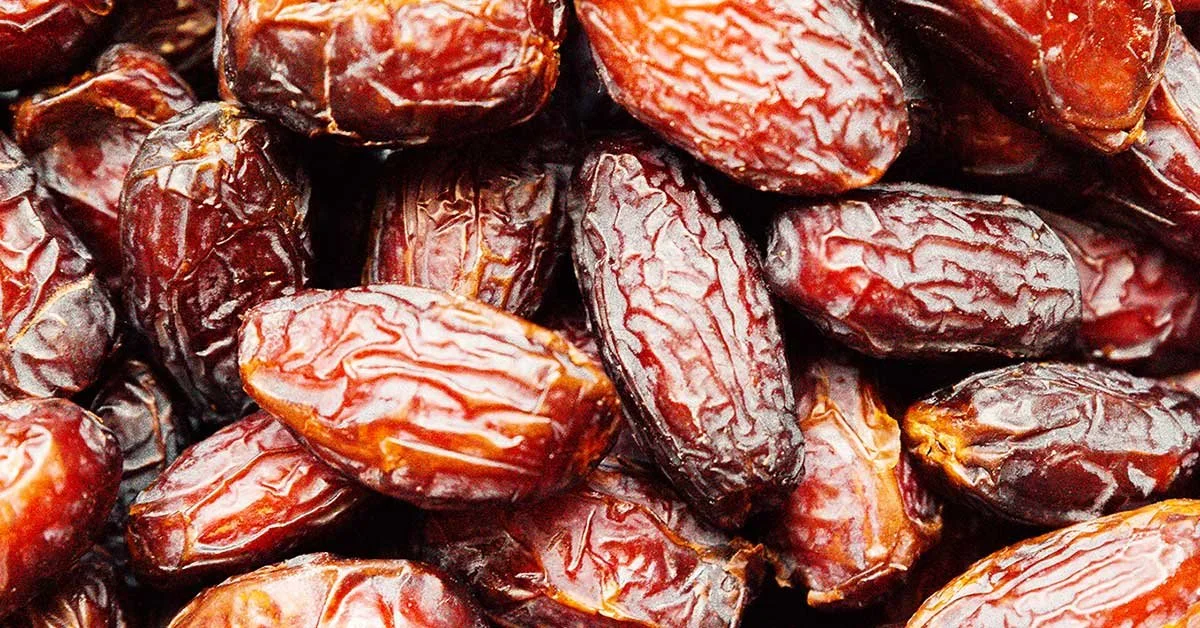
Though they can be eaten fresh, dates are usually found dried. Dried dates are a deep brown color with a wrinkled texture.
There are several different date varieties; the size and flavor of dates differ depending on variety. Generally speaking, dates are the size of a small thumb and have a very sweet caramel-like taste. The most common varieties are medjool, deglet noor, and honey dates.
Nutrition Info
One fresh medjool date has about 66 calories, 0.43g of protein, 18.0g of carbohydrates, 1.6g of fiber, 16.0g of sugar, and 0.04g of fat.
Dates are rich in vitamin A and are a great source of minerals including calcium and potassium.
Selection
Fresh dates should be plump looking and have a glossy look to their skin. They shouldn’t feel hard or have crystallized sugar on their skins.
Dried dates come pre-packaged or can be bought in bulk. Simply check the expiry date on the bag before purchasing, or look for dates that have a glossy sheen and fragrant scent, with no mold or mustiness.
Storage
Store fresh dates in an airtight container in the fridge for up to four weeks.
Store dried dates in the fridge up to the expiry date on the packaging.
Preparation
Fresh dates don’t require a lot of preparation. Simply remove the pit from the center and enjoy.
For dried dates, enjoy them as they are or soak them in hot water to rehydrate them.
Dates are great on their own as a sweet snack. They can be served as part of a platter with cheese, nuts or natural nut butter, and other dried fruit. For a decadent savory-sweet treat, stuff the hollow centers of pitted dried dates with goat cheese or blue cheese, wrap them in bacon, then broil until the bacon is crisp. Serve warm.
Dates can be used in a variety of recipes, especially baked goods and desserts, due to their high sugar content. In fact, dates are a great substitute to refined white sugar.