

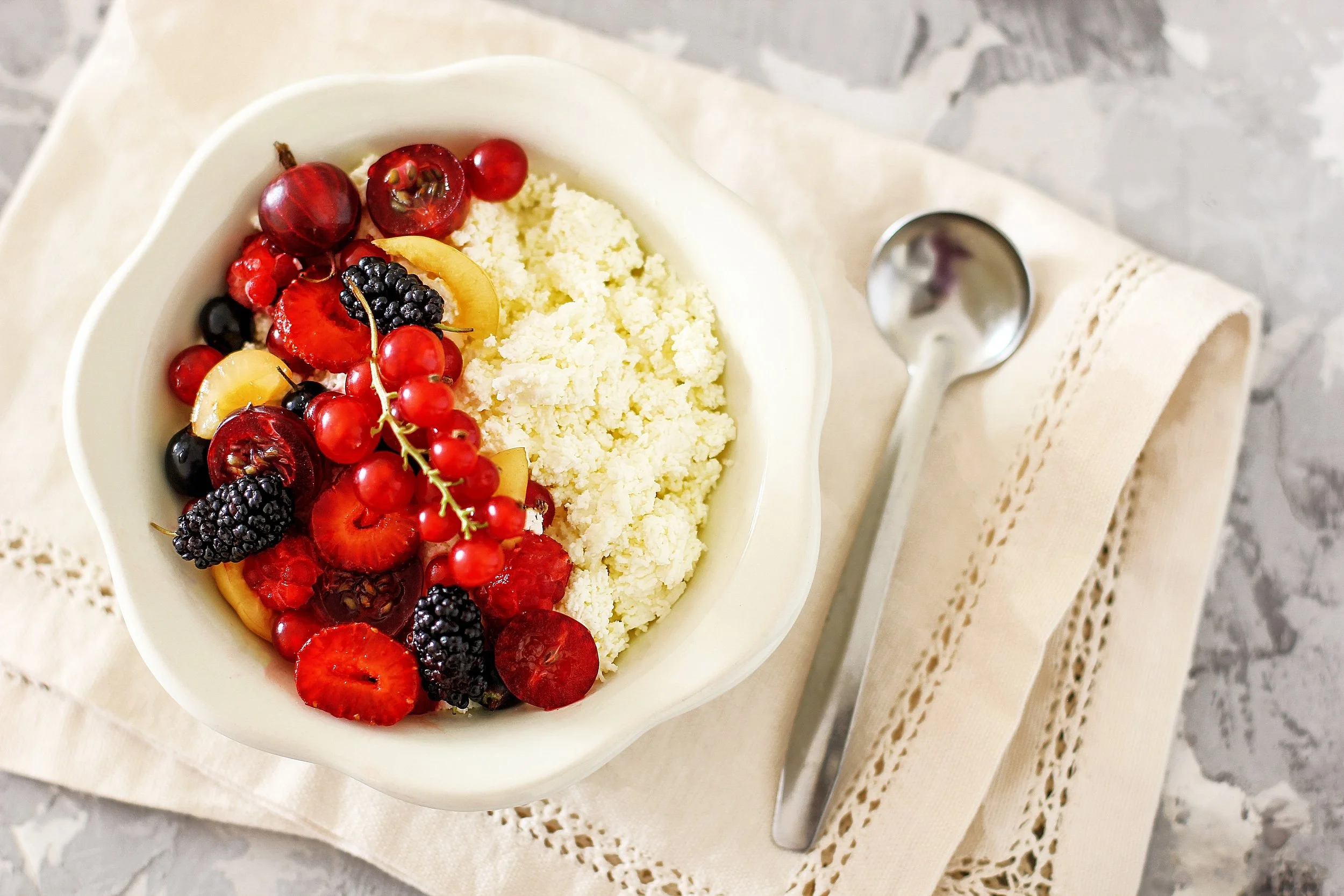
cottage cheese
Overview
Whether enjoyed on its own, mixed into salads, or used as a creamy base for dips, cottage cheese is a versatile and nutritious ingredient that can be a delightful addition to many dishes.
Technically speaking, cottage cheese is a fresh cheese curd product with a mild flavor, made from curdled milk. Unlike other cheeses, it is not aged or ripened, giving it a soft, spreadable texture.
Before the era of industrialization, cottage cheese was made by adding rennet to milk, causing it to curdle. The curds were then cut, heated, and drained to remove the whey. Today, the process has been refined and mechanized to produce cottage cheese more efficiently.
Here’s how it’s made:
First, pasteurized milk is inoculated with a starter culture of bacteria, which ferments the lactose into lactic acid. This acidification process causes the milk to curdle and form curds. Rennet may also be added to aid in coagulation.
The curds are then cut into small pieces to release the whey. The mixture is heated and stirred to help expel more whey and to firm up the curds. After reaching the desired consistency, the curds are drained and rinsed to remove any remaining whey and to cool them down.
In a final step, the curds are mixed with a small amount of cream or milk to add moisture and creaminess. If desired, salt or other flavorings may be added. The cottage cheese is then packaged and refrigerated.
Oh! And then comes the best part! You get to eat it!
Identification
Cottage cheese is typically sold in tubs or containers with resealable lids. It has a lumpy, creamy texture and can range in color from white to off-white.
Cottage cheese has a mild, slightly tangy flavor and a soft, curd-like texture. It is available in various curd sizes, including small curd, large curd, and even whipped varieties.
There are a few different varieties of cottage cheese available, each with slight variations in taste and texture:
Regular cottage cheese: Made from whole milk, this variety has a creamy, rich flavor and texture.
Low-fat cottage cheese: Made from reduced-fat milk, this variety has a lighter texture and slightly tangier flavor.
Non-fat cottage cheese: Made from skim milk, this variety has a firmer texture and a more pronounced tangy flavor.
Nutrition Info
One cup of cottage cheese (about 210g) has approximately 206 calories, 27g of protein, 9g of fat, and 6g of carbohydrates. Cottage cheese is a good source of calcium, phosphorus, and B vitamins, making it a nutritious addition to a balanced diet.
Selection
Cottage cheese is found in the dairy section of most grocery stores.
Choose good quality cottage cheese from reputable brands. Read ingredient labels to find products that are free of unnecessary additives or preservatives. The best cottage cheese will have a simple ingredient list, typically including milk, cream, salt, and bacterial cultures.
Make sure the containers are well sealed, and check the expiration dates to ensure you are getting a fresh product.
Storage
Store cottage cheese in its original container in the fridge. Once opened, it should be consumed within 5-7 days for the best quality and taste. Keep the container tightly sealed to prevent the cheese from drying out or absorbing other odors from the fridge.
Cottage cheese should not be frozen, as the texture will become grainy and unappetizing once thawed.
Preparation
Cottage cheese is incredibly versatile and can be used in both savory and sweet dishes. It is ready to be enjoyed right out of the container or can be incorporated into a variety of recipes.
Cottage cheese can be eaten in a variety of ways: mixed with fresh fruit for a healthy snack; spread on toast or crackers; stirred into pancake or muffin batter for added protein; blended into smoothies for creaminess; used as a base for dips or spreads; or added to salads, pasta dishes, or casseroles for a creamy texture.