

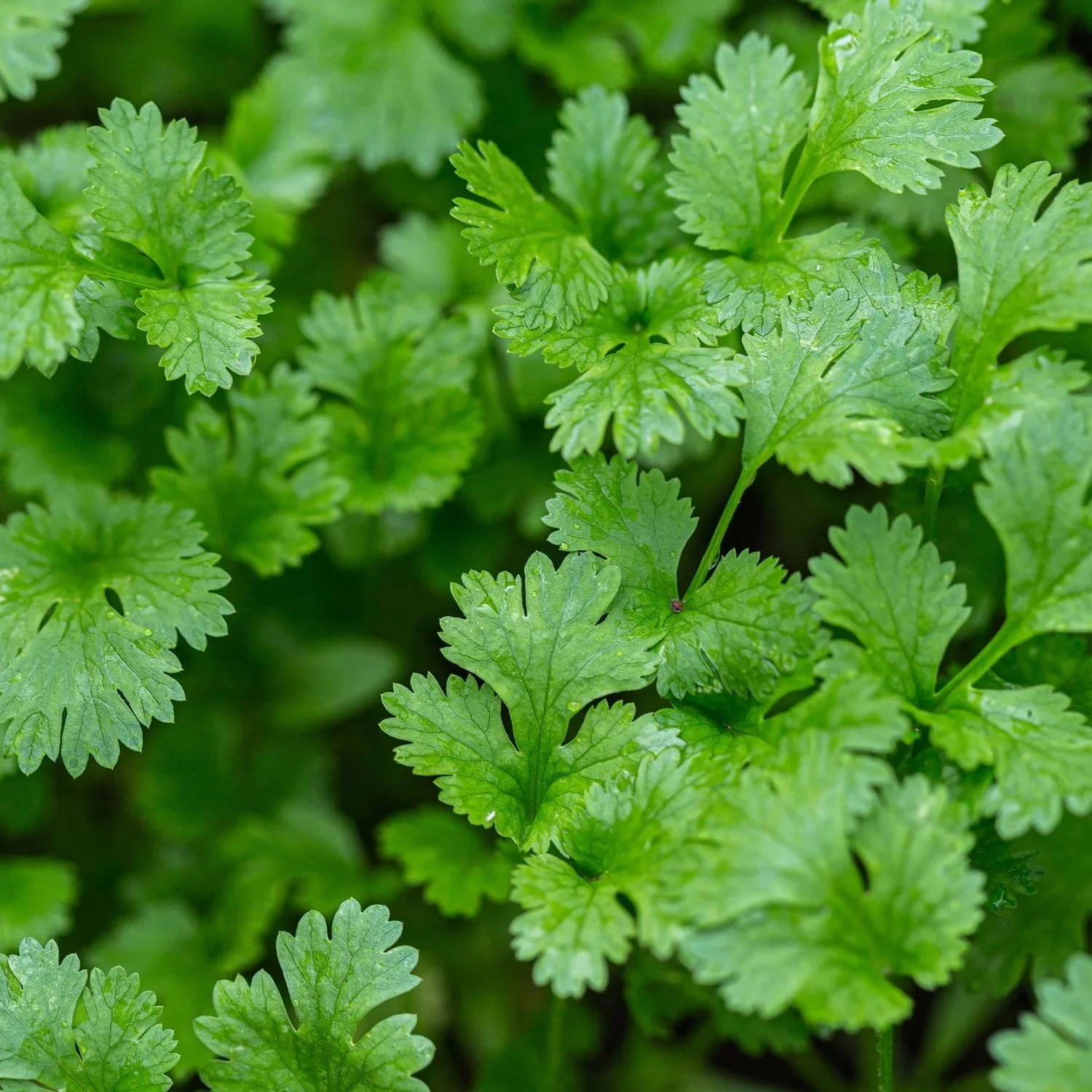
cilantro
Overview
Cilantro is a fresh herb, sometimes also called coriander leaves.
(Note that cilantro is different from the herb coriander, which is a commonly dried spice with a very different flavor profile.)
This prolific herb grows, and is enjoyed, in many regions around the world.
The unique flavor of cilantro is difficult to describe. It is clean and bright but also a bit pungent and spicy. For some its taste is delightful and addictive – for some it is off-putting. In fact, for some tasters, cilantro has an unpleasant soapy or metallic taste. If you happen to be one of the unlucky minority, cilantro is not for you!
Cilantro is usually available year round. During the summer months, look for it at your local farmers’ market or consider growing it in your own garden.
Identification
Cilantro is bright green, with a long stem and a flat leaf.
It can be mistaken for flat leaf or Italian parsley. To know for sure, have a sniff: cilantro has an unmistakable scent.
Nutrition Info
One-quarter cup of cilantro contains a single calorie, 0.09g of protein, 0.02g of fat, 0.15g of carbohydrates, 0.1g of fiber, and 0.03g of sugar.
Cilantro is loaded with nutrients such as vitamin A, vitamin C, vitamin E and vitamin K, as well as riboflavin, niacin, vitamin B6, folate, pantothenic acid, calcium, iron, magnesium, phosphorus, potassium, copper and manganese. It’s even a source of fiber! While you’re unlikely to eat cilantro in large enough quantities to get big amounts of these nutrients, adding this herb to your meals can give you an added dose of nutrition.
Selection
Find cilantro among the other fresh herbs in the vegetable section of your grocery store or market.
Cilantro is usually sold in bunches. Sometimes the roots are still attached — this can be a sign of freshness.
Look for bright green, relatively unblemished leaves. Avoid cilantro that is overly wilted, turning black, or showing similar signs of decay.
Storage
Store the herbs in a loose, open plastic bag in the vegetable crisper of your fridge. Cilantro will usually last about 5 days, depending on its freshness at purchase.
To extend the freshness of cilantro, as with other herbs, you may store it in a glass or small vase of fresh water, loosely covered, in your fridge. This will help keep the herb alive and flavorful for a few extra days.
To freeze cilantro try this technique: blitz a bunch of cilantro leaves in a food processor. Then add a couple tablespoons of water to the mix. Pour into an ice tray and store in your freezer. Then when you want a pop of flavor, add a cube or two to whatever you’re cooking.
Preparation
Rinse the herbs with cool water. Chop the cilantro depending on your preference: you may choose to tear a few leaves off for garnish, or finely chop a big bunch.
Feel free to use the stems: chop them finely, then use as you would the rest of the herb. If roots are intact, remove and discard (or wash them thoroughly and chop finely).
Cilantro is a delicate herb so most of the time it is best added towards the end of preparing a dish, or as a garnish. However, for some preparations you may choose to add cilantro at the beginning along with other aromatics (this may be the case with some soups or curries). In this instance, roots/stems may hold up better than the leafy top.
Cilantro pairs well with other strong and bright flavors, such as coconut milk, peanut sauce, barbecue sauce, mango, onions, and chili. Cilantro is used in many world cuisines including Southeast Asian, Latin American, Middle Eastern, and more.