

cherry
Overview
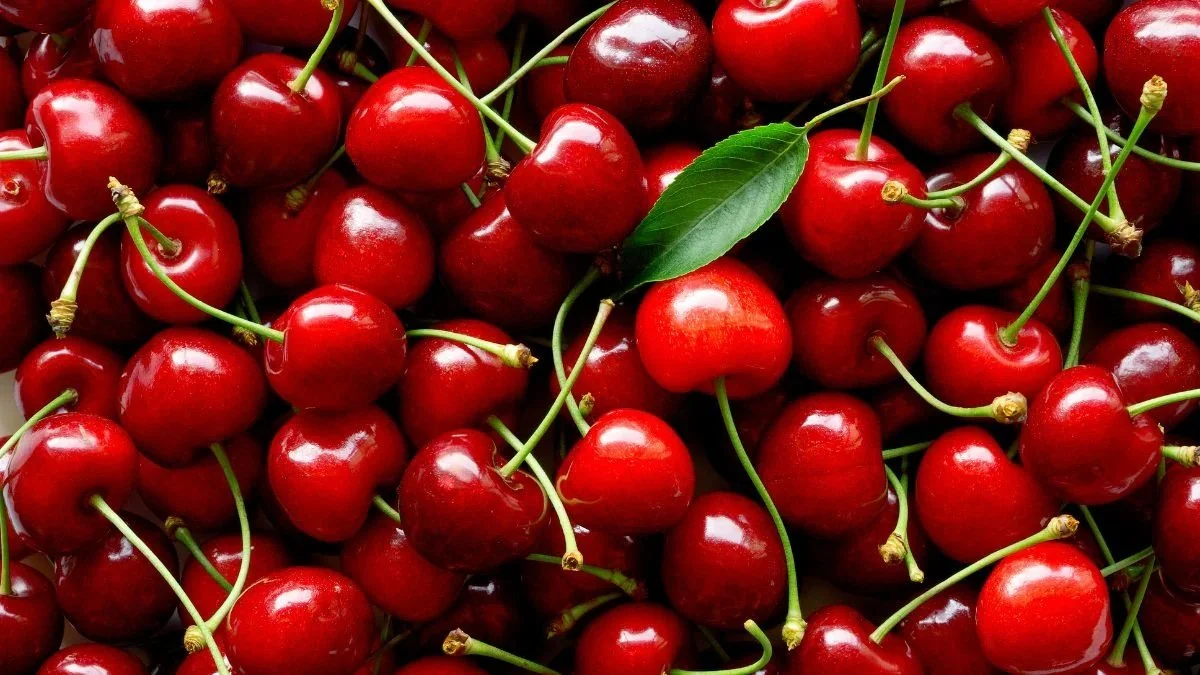
The cherry is a stone fruit that grows on trees of the “Prunus” genus. Cherries grow on stems and contain a small, hard pit in their center. Surrounding the pit is juicy, tender, edible flesh.
Sweet cherries (sometimes called “wild cherries”) are the most common kind of edible cherry: as the name suggests, they are sweet and tasty.
Sour cherries (also called “tart cherries”) have a shorter growing season and may be harder to find. However, these are most suitable for baking.
Cherries are a summer fruit; depending on the climate they typically come into season between June, July, and August.
Identification
Sweet cherries have a deep, dark red color, and are plump and round in shape.
Sour cherries are smaller, like a little round ball. They are a bright red color and may have some yellow/green coloring as well.
Fresh cherries are usually sold in bags with their stems still attached.
Nutrition Info
A 100g serving of cherries contains 63 calories, 1.1g of protein, 0.2g of fat, 16.0g of carbohydrates, 2.1g of fiber, and 12.8g of sugar.
Cherries are packed with vitamin C and potassium. They also contain some calcium, magnesium, phosphorus, and iron. As a bonus, cherries are high in phytosterols which can help lower cholesterol levels and reduce the risk of heart disease.
Sour cherries also contain melatonin; for this reason, some people drink tart cherry juice before bed as a sleep aid.
Bonus: both sour cherries and sweet cherries offer an abundance of antioxidants.
Selection
Look for cherries that are bright in color and that are moist and juicy looking. Note that sour cherries lose their great vibrant color soon after picking; if you spot sour cherries that are very bright red you’ll know they are fresh!
Avoid cherries with major bruising, discoloration, and most importantly, signs of mold.
If you really want to get your hands on the freshest cherries, do a little research to find a “U-pick” farm near you, or visit a farm stand or farmers’ market.
Not cherry season but still want a taste? You may find frozen cherries in the freezer section of your supermarket. Alternatively, dried sour cherries can sometimes be obtained at bulk stores or gourmet food shops; these make a nice addition to salads, granola, and baked goods. (Try them in place of dried cranberries.)
Be wary of canned or jarred cherries: these may actually be cherry pie “filling” or maraschino cherries, both of which are meant for desserts and contain lots of added sugar and ingredients other than fruit. That said, if you enjoy the practice of preserving, you may try canning cherries (or making cherry jam or jelly) when cherries are in season.
Storage
Keep cherries in a loose, open plastic bag in the fruit crisper of your fridge. Wash them just before eating, as washed fruit will deteriorate more quickly.
If you prefer to wash cherries in advance, keep them in an open bowl in your fridge. Snack away: they are best eaten quickly and will probably keep a few days at most.
Preparation
Sweet cherries can be eaten out of hand: just wash, bite the fruit off of its stem, and spit out the pit.
To prepare cherries for baking or other use, you’ll need to remove the pit first. If you want a nice looking whole cherry with the pit magically removed, you can try a special tool called a cherry pitter. Or you can poke the pit out using a crab/lobster pick, a baking pipe tip, or a strong pair of tweezers. (Hint: This will take some finesse and experimentation.)
Alternatively, slice the cherry down the center with a paring knife. With your fingers, twist the two halves of cherry apart and pull out the pit.
Once pitted, cherries can be used in sweet or savory preparations. While baked goods are one option (cherry pie is a favorite!) you may also try adding cherries to a main course.
For example, roasted cherries pair well with with duck or pork, or make a great topping for baked brie. They also make an excellent marinade for grilled meat: simply mash cherries and add to fresh lime juice, fresh basil or rosemary, and olive oil. (As a bonus, this will help counteract any nasty cancer-promoting compounds of grilling.) An even easier option: roughly chop some cherries and add them to a salad with a little goat cheese and pistachio nuts.