

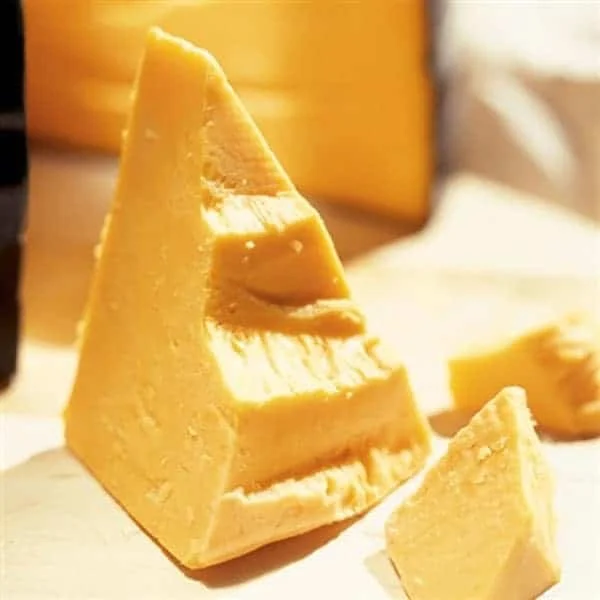
cheddar
Overview
Cheddar cheese is one of the most popular and versatile cheeses in the world. Originating from the village of Cheddar in Somerset, England, this cheese is known for its rich, tangy flavor and firm texture. Cheddar can vary in taste and texture depending on its age, ranging from mild and creamy to sharp and crumbly.
Cheddar is traditionally made from cow's milk and is aged for different lengths of time to achieve various flavor profiles. The aging process can last from a few months to several years. The cheese is often colored with annatto, a natural dye, to give it a distinctive orange hue, although white cheddar, which is not colored, is also common.
Here’s how it’s made:
First, cow's milk is heated and mixed with a starter culture to ferment the lactose into lactic acid. Rennet is then added to coagulate the milk, forming curds. The curds are cut into small pieces to release the whey and then heated to further expel moisture.
The curds undergo a process called "cheddaring," where they are stacked, turned, and pressed to expel more whey and develop the cheese's texture. After cheddaring, the curds are milled into small pieces, salted, and pressed into molds. The cheese is then aged in controlled conditions to develop its flavor and texture.
Identification
Cheddar cheese is typically sold in blocks, slices, or shredded form. It has a firm, smooth texture that becomes more crumbly with age. The color can range from white to deep orange, depending on whether annatto is used.
Cheddar has a distinctive, tangy flavor that intensifies with age. Mild cheddar is smooth and creamy, while aged or sharp cheddar has a stronger, more complex flavor and a crumbly texture.
Nutrition Info
One ounce (28g) of cheddar cheese contains approximately 113 calories, 7g of protein, 9g of fat, and less than 1g of carbohydrates. Cheddar is a good source of calcium, phosphorus, and vitamin A, and it also provides some vitamin B12.
Selection
Cheddar cheese can be found in the cheese section of most grocery stores, available in various forms and aging levels. Here are some tips for selecting cheddar cheese:
Type and Age: Choose based on your preference for flavor intensity. Mild cheddar is aged for 2-3 months, medium cheddar for 3-6 months, sharp cheddar for 6-12 months, and extra sharp cheddar for over a year. The longer the cheese is aged, the less lactose sugar is present and thus easier to digest for people with lactose intolerances.
Packaging: Ensure the packaging is intact and free from signs of spoilage. Check the expiration date to ensure freshness.
Ingredients: Look for cheddar made from simple ingredients: milk, bacterial cultures, salt, and enzymes. Avoid products with unnecessary additives or preservatives.
Storage
Cheddar cheese should be stored in the refrigerator. If purchased in a block, wrap it tightly in wax paper or parchment paper, followed by a layer of plastic wrap or aluminum foil. This helps preserve its moisture and flavor while allowing it to breathe.
Shredded or sliced cheddar should be stored in an airtight container. Cheddar cheese can last for several weeks to a few months when stored properly. If the cheese develops mold, you can cut off the affected area and still use the rest.
Preparation
Cheddar cheese is incredibly versatile and can be used in a variety of dishes. Here are some popular ways to enjoy it:
Grated: Grate cheddar over dishes like pasta, salads, and baked potatoes for added flavor.
Sliced: Use slices of cheddar in sandwiches, burgers, and wraps.
Chunks: Serve cheddar in chunks as part of a cheese platter with fruits, nuts, and crackers.
Cooking: Incorporate cheddar into recipes for macaroni and cheese, quesadillas, casseroles, and soups.
Cheddar cheese adds a rich, savory flavor to dishes and pairs well with ingredients like apples, pears, onions, mustard, and cured meats. Its robust flavor and smooth texture make it a staple in many recipes, both simple and gourmet.