

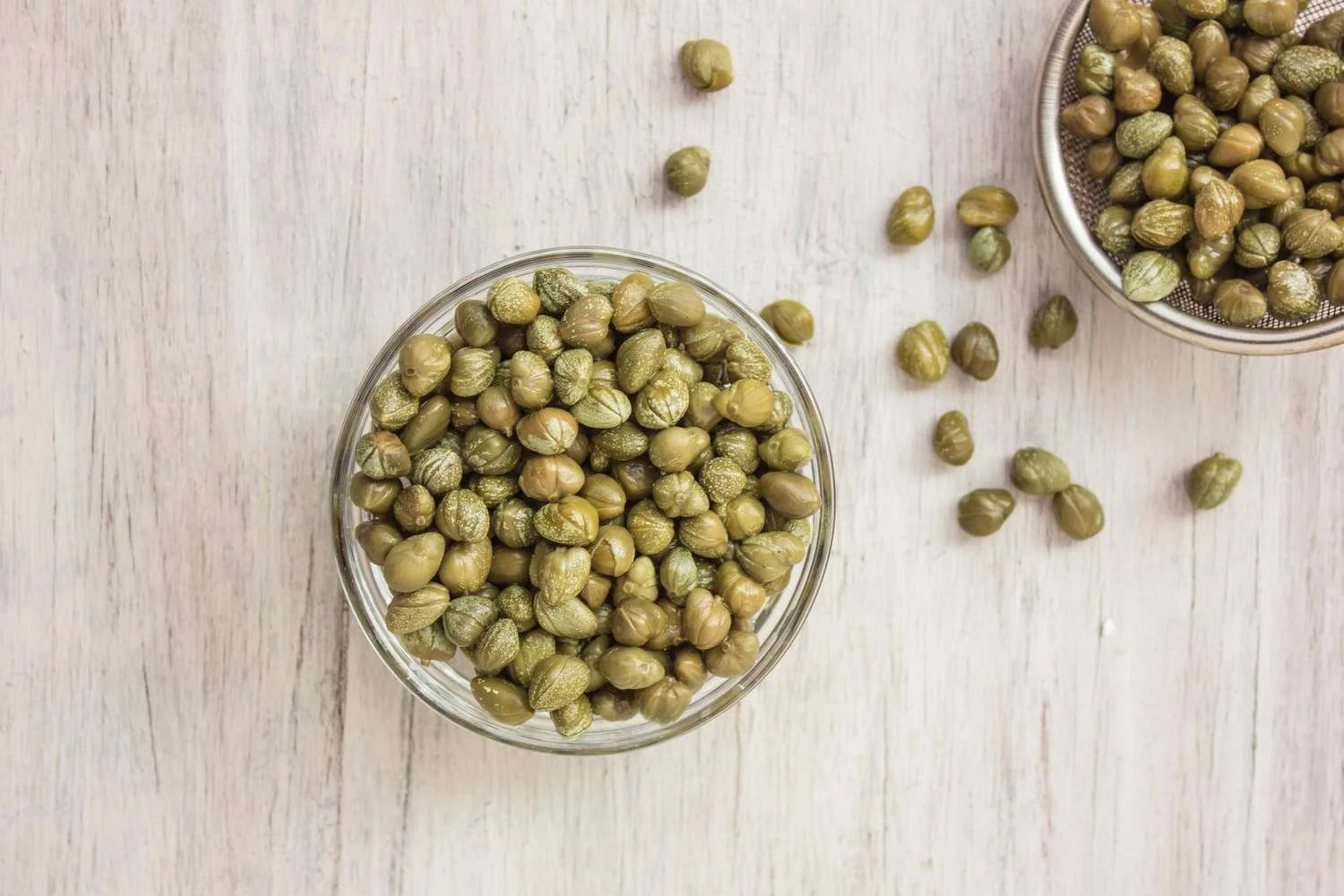
capers
Overview
Capers are small, green flower buds from the caper bush (Capparis spinosa) that are commonly used as a seasoning or garnish in a variety of dishes. Native to the Mediterranean region, capers have been a staple in Mediterranean cuisine for centuries. They are known for their tangy, salty, and slightly floral flavor, which adds a burst of taste to recipes.
Capers are often pickled in brine or vinegar, which enhances their distinctive taste. They are a key ingredient in dishes such as chicken piccata, puttanesca sauce, and smoked salmon with cream cheese. Capers also pair well with fish, poultry, and salads, adding a unique depth of flavor.
Identification
Capers are small, round, and green, ranging in size from about the size of a small pea to a large lentil. They have a slightly wrinkled surface and a firm texture. When pickled, capers have a briny, tangy flavor with floral and citrusy notes.
There are two main types of capers available in the market:
Non-pareil capers: These are the smallest and most delicate capers, considered to be the finest quality. They are often used in gourmet dishes.
Capotes: These are larger capers, about the size of a small pea. They have a slightly stronger flavor and are often used in everyday cooking.
Nutrition Info
One tablespoon of capers (about 9g) contains approximately 2 calories, 0.2g of protein, 0.1g of fat, 0.4g of carbohydrates, 0.3g of fiber, and 0g of sugar. Capers are low in calories but high in sodium due to the pickling process. They also contain small amounts of vitamins and minerals, such as vitamin K, iron, and magnesium.
Selection
Capers are widely available in grocery stores and specialty food markets. When selecting capers, look for:
Packaging: Capers are typically sold in jars or cans. Ensure the packaging is sealed properly and check the expiration date.
Appearance: The capers should be firm, green, and uniformly sized. Avoid jars with capers that look mushy or discolored.
Brine: The brine or vinegar solution should be clear and not cloudy, indicating freshness and proper preservation.
Non-pareil capers are often considered the best quality, but capotes are also a good option for everyday use.
Storage
Store unopened jars of capers in a cool, dark place, such as a pantry, where they will keep for up to a year. Once opened, capers should be stored in the refrigerator, submerged in their brine or vinegar. Properly stored, they will last for about six months.
If the capers dry out or the brine becomes cloudy, it’s a sign they may have gone bad and should be discarded.
Preparation
Capers are ready to use straight from the jar but may benefit from a quick rinse under cold water to remove excess salt or brine. They can be used whole, chopped, or minced, depending on the recipe.
Here are some common ways to use capers:
Sauces: Add capers to sauces like piccata, tartar sauce, or puttanesca for a burst of tangy flavor.
Garnish: Sprinkle capers over salads, smoked salmon, or deviled eggs for added taste and texture.
Cooking: Incorporate capers into dishes like pasta, fish, chicken, or roasted vegetables to enhance the overall flavor profile.
Marinades: Use capers in marinades for meats or vegetables to infuse a unique, briny taste.
Capers add a delightful tang to a wide variety of dishes, making them a versatile and flavorful addition to any kitchen.