

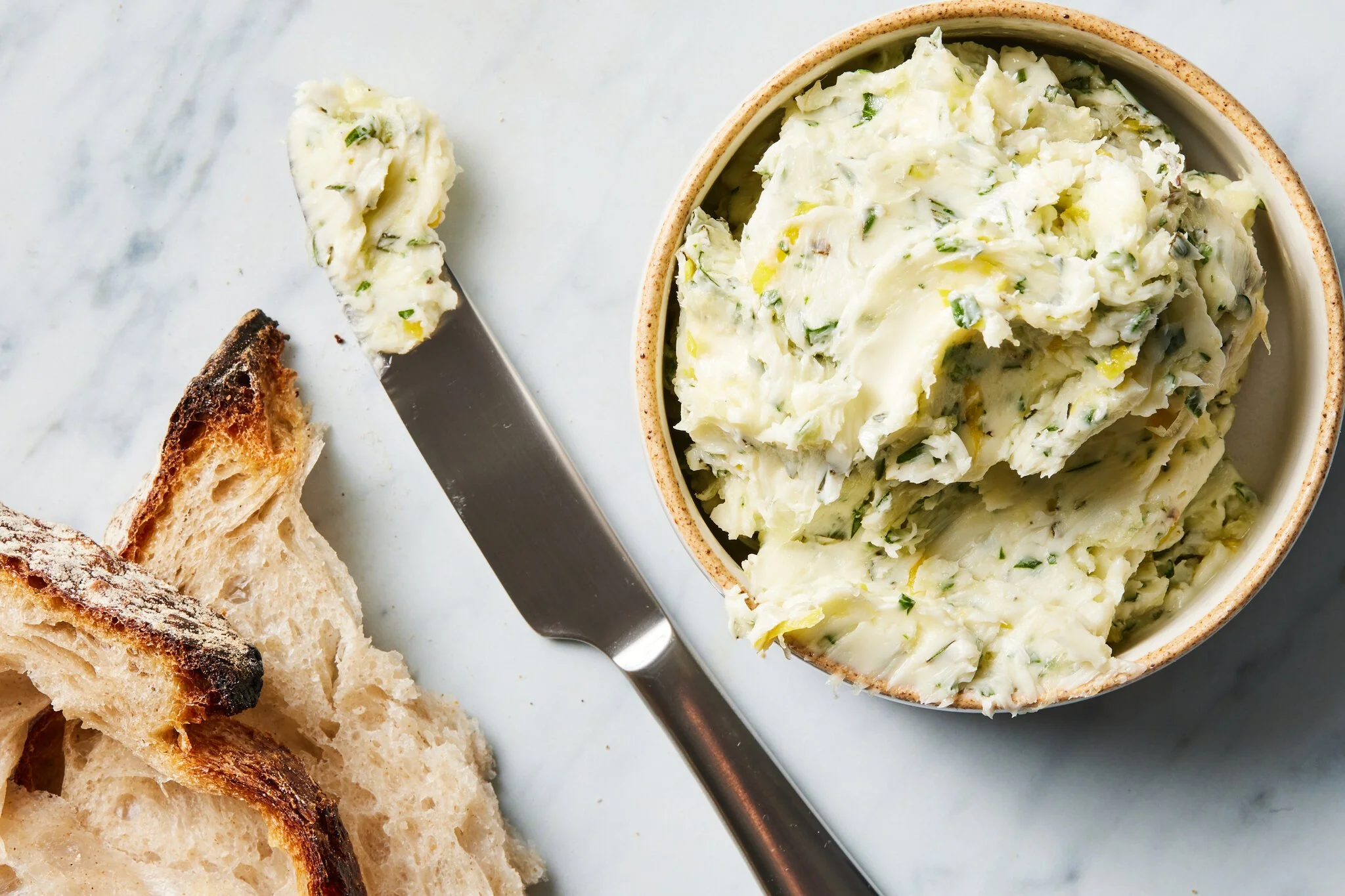
butter
Overview
Whether topped over steamed vegetables, crusty bread, or baked into a beautiful golden pastry, butter is an ingredient that makes culinary magic.
Technically speaking, butter is simply milk fat that’s been pressed into a block, but anyone who’s tasted it knows that this block of milk fat is greater than the sum of its parts.
Before the era of industrialization, our ancestors used to make butter with not much more than a large barrel and some arm muscles, in small batches at a time. Today, shiny machines have taken the place of humans in order to mass produce this delicious substance more efficiently.
Here’s how it’s made:
First, unprocessed, unhomogenized milk from a cow* is put through a machine that spins the milk and begins to separate the fat from the liquid. The fatty portion yielded from this process is a thick, off-white liquid called buttercream, and the fat-free portion is called skim milk.
The buttercream is then pasteurized. If the butter is cultured, probiotic bacteria is added and the mixture is aged for about 24 hours. Then, the buttercream is ready to be churned. Through churning, fat molecules in the buttercream begin to clump together, separating further from the liquid, forming solid clusters of milk fat. The liquid portion yielded from this process is called buttermilk, and the solid clusters of milk fat are called popcorn butter.
In a final step, the popcorn butter is strained and pressed to remove all liquid, and then milled to create a smooth consistency. If the butter is salted, salt is added. Butter is then packaged, typically in block shapes wrapped in foil-covered wax paper.
Oh! And then comes the best part! You get to eat it!
*Although most butter comes from cow’s milk, butter can be made from any animal milk. In certain parts of the world, it may be more customary to consume butter that comes from goats, buffalo, or yak.
Identification
Butter is typically sold in rectangular blocks wrapped in foil-covered wax paper. If it is whipped or flavored, it may come in a resealable rigid container.
Plain butter ranges in color from nearly white to pale yellow. The color of the butter will depend on what the cow was fed, or whether coloring agents, such as annatto, were added.
Butter has a luxurious, creamy mouthfeel and a sweet milky flavor with the slightest hint of sour tang. Being almost entirely composed of fat, it is an excellent transporter and enhancer of other flavors, which is why butter seems to make everything taste better.
When stored in the fridge, butter is solid and firm. At room temperature, it becomes soft and spreadable. Over 35°C / 95°F, it melts into a translucent golden yellow liquid.
There are a few different varieties of butter available, each with slight variations in taste and appearance:
Cultured butter: Sometimes called “European style” butter, this butter comes from milk that has been lightly fermented with beneficial bacteria, resulting in a fuller, more robust flavored butter.
Whey butter: Instead of milk, whey butter is made from the whey liquid leftover from the cheese-making process. Whey butter has a slightly lower fat content than regular butter, and a tangier, cheesier flavor.
Clarified butter: Clarified butter is butter that has been heated and then separated from nearly all milk proteins (like whey and casein) and milk sugars (like lactose). What’s left over is nearly 100% butterfat. Clarified butter is more yellow and more buttery tasting than regular butter.
Nutrition Info
One tablespoon of butter (about 14g) has 102 calories, 0.1g protein, 11.5g of fat, and no significant carbohydrates, fiber, or sugar. The nutrient content of butter will depend on what the cow was fed, but a good quality, grass-fed butter will be a good source of vitamin A and vitamin K.
Selection
Butter is found in the refrigerated section of most grocery stores.
Choose good quality butter from organic, grass-fed, and/or well-cared for cows. Read ingredient labels to find products that are free of additional coloring or flavoring agents. The only ingredients necessary are milk or cream, salt (if salted), and bacterial cultures (if cultured).
Make sure the packages are well sealed, and check the expiration dates to ensure you are getting a fresh product.
Storage
Store butter in its original wrapping or another sealed container in the fridge for up to a month. Butter can also be stored in the freezer, where it will last for about six to nine months.
If you like your butter at a spreadable consistency, small amounts of butter can also be kept at room temperature for one to two weeks. Butter left in environments above room temperature will go rancid much faster. Either way, keep the butter covered to keep out bacteria or other pests.
Preparation
Butter is endlessly versatile and enhances nearly all foods. It is ready to be used right out of the package once the right vehicle is presented.
Butter can be eaten in a variety of ways: spread on bread or a warm muffin; baked into pastries or biscuits; whisked into a sauce; melted over whole grains, pasta, or popcorn; or used as a cooking fat or topping for vegetables, seafood, poultry, or meat.