

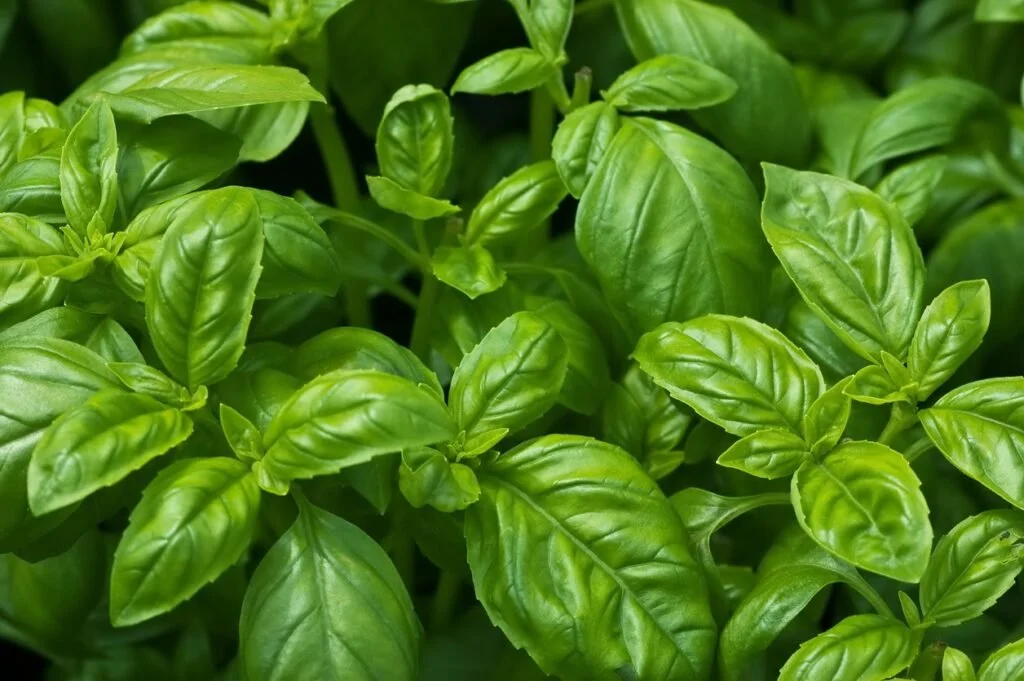
basil
Overview
Basil is an herb that belongs to the mint family. In Western cooking (particularly Italian cuisine), the most common variety is sweet basil, also known as Genovese basil. It has a sweet-savory flavor with hints of licorice and mint.
Thai basil, lemon basil, and holy basil are other varieties of the same family, which are more common in Asia.
Like many herbs, basil can be found dried or fresh. This entry concentrates on fresh sweet basil.
Identification
Basil is a bright green plant, with large pointed leaves and thin stalks. It grows in big, leafy bunches.
Nutrition Info
A quarter cup of fresh basil has 1.0 calories, 0.19g of protein, 0.04g of fat, 0.16g of carbohydrates, 0.1g of fiber, and 0.02g of sugar.
Basil is an excellent source of potassium (18 mg in a 1/4 cup). It’s also a good source of manganese, copper, vitamin A, folate, and iron.
Selection
Basil is seasonal in summertime but it can usually be purchased year-round. You may find it in packages or bundled loose in the produce section of your grocery store.
Choose bright green, fragrant leaves with no signs of wilting or blackening.
For the freshest basil, try growing it yourself! Starter plants may be available at your local nursery or grocery store during the spring and summer months.
Storage
Basil is best eaten as soon as possible after picking.
If you’re going to eat the basil within a couple days, you can keep it on your kitchen countertop in a glass or pitcher of water, as you would fresh cut flowers. Change the water daily, and keep the basil out of direct sunlight.
If keeping the basil for longer you can store it in the fridge, in a loose, open plastic bag or the container you purchased it in.
Preparation
Wash basil well in cool water. (If the basil is very dirty, place it in a large bowl and cover it with cool water. Swish the basil around to release the dirt. Pull the basil out of the water, rinse the bowl, and repeat until all the dirt and grit is gone.)
Pinch the basil leaves off of the stems. You can then tear the basil with your hands or slice it thinly with your knife.
If you’re slicing the basil, try this trick: stack a bunch of leaves onto each other, and roll them up with your fingers to create a tight tube. Then cut across the leaves horizontally with your knife to create thin slivers. This is known as a chiffonade and is excellent as a garnish.
Take note that basil can bruise easily and turn black. To avoid this, tear gently with your fingers or slice carefully with a sharp knife.
Basil is best eaten fresh. In cooking, basil will wilt and lose its best flavor, so add it at the end of recipes when possible.
One of the most popular preparations of basil is pesto: an Italian sauce / condiment made of fresh basil, pine nuts, parmesan cheese, and olive oil.