

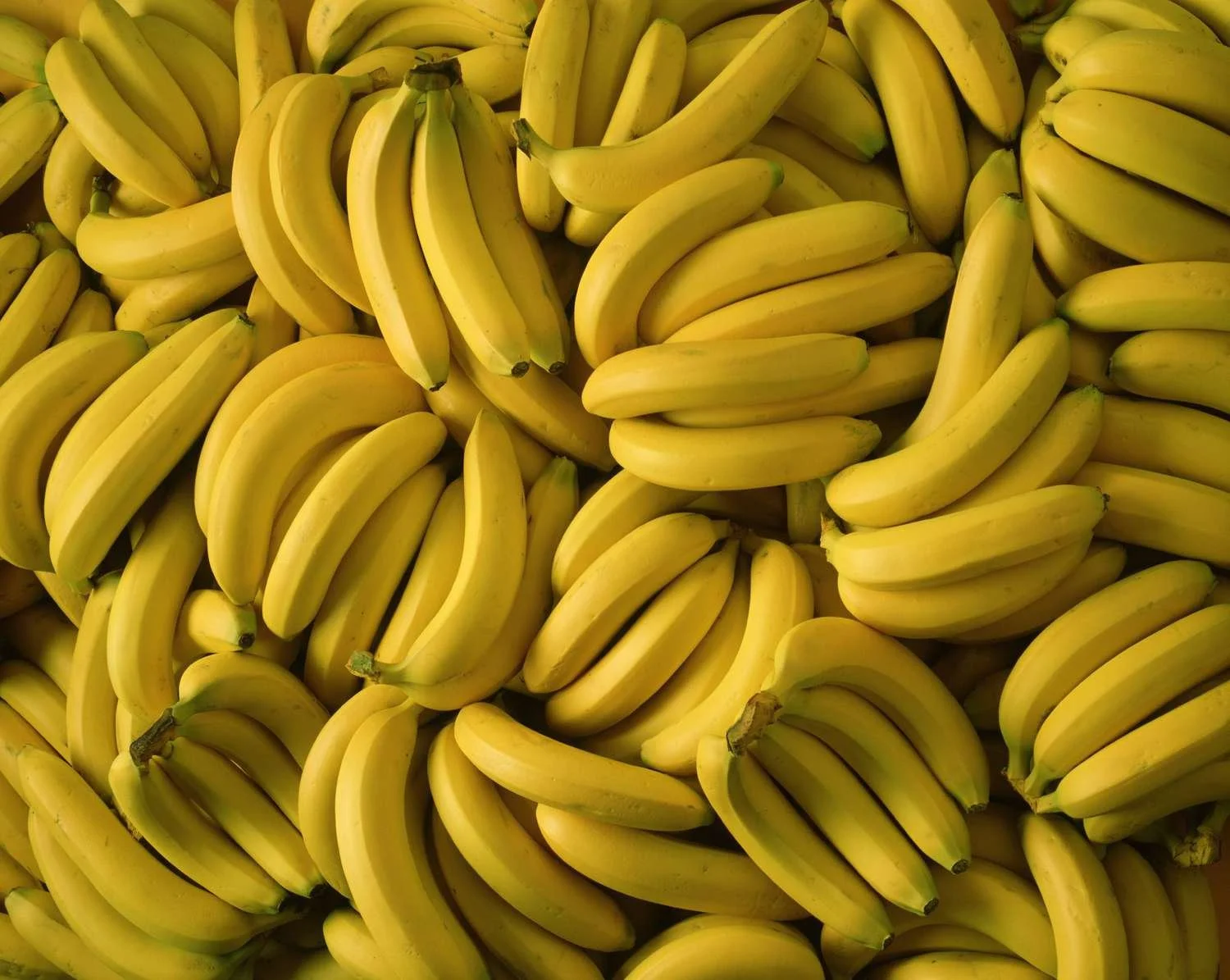
banana
Overview
Bananas are a starchy fruit that grow in clusters on trees in tropical locations.
The most common banana variety is easily recognizable for its bright yellow color and curved shape. But there are other varieties of bananas, too; they can be red, purple or brown; smaller or bigger; starchier or sweeter.
Because they are easy to hold and peel, bananas are usually eaten out of hand as a snack, or sliced and added as a topping for breakfasts like oatmeal, or desserts like pudding. They are also used in baking, and make a great addition to smoothies (or as we like to call them, Super Shakes).
Identification
Bananas are easily identified by their bright yellow color and curved shape.
Nutrition Info
One small-to-medium sized banana (100g) contains about 89 calories, 1.10g protein, 0.33g of fat, 22.84g of carbohydrates, 2.60g of fiber, and 12.23g of sugar.
Bananas are rich in potassium, vitamin C, and manganese.
Selection
To pick a banana that is ripe, or close to ripeness, first check the color. Common bananas start out green, turn yellow when ripe, and turn brown or black when over-ripe. Some bruising on bananas is common; a few brown streaks along the peel shouldn’t turn you off—but the banana should look firm and mostly yellow.
Next, check the texture. A ripe banana should yield slightly to gentle pressure. An unripe banana will feel very firm.
It can be tricky to find a perfectly ripe banana. In your search for a banana that is “just right” you may choose to go with one that is slightly on the unripe side with just a hint of green. This banana will be a little less sweet and a little more firm. On the other hand, a banana that is a little more ripe will have a stronger smell, taste sweeter, and have a slightly mushier texture.
Storage
Keep bananas on the counter (not in the fridge) and eat them as soon as they are ripe. Bananas will continue to ripen as they sit out: for this reason, you may choose to buy slightly unripe bananas if you want to eat them over the course of the week.
If your bananas turn overripe (dark brown or black and mushy), put them in the freezer. You can then quickly defrost them in the microwave and use them in baking or smoothies.
Preparation
The most obvious way to open a banana is to hold it with one hand, then grip the top stem firmly and pull down. The banana peel will naturally split open.
However, some bananas are stubborn and don’t want to open. In this case you may want to try peeling it from the opposite side. Grab the small, flat ridge tightly between your fingers (you may need to pinch it a little) and pull. (Fun fact: this is the way the monkeys do it!)
Eat the banana directly out of the peel, or slice it and add it to another dish. If you’re baking, you might need to mash the banana: assuming the banana is ripe, it will easily mash with a fork.