

amaranth
Overview
Unless you are into “indie” grains or are familiar with ancient Mexican history, you may not have heard of amaranth.
Amaranth, although it is often classified as a grain, is actually a gluten-free “pseudograin”. Pseudograins, unlike true grains, are not grown from grasses, and rather come from flowering plants; Quinoa and buckwheat are two other examples of pseudograins. Because they have similar nutritional properties and culinary uses as true grains, these pseudograins are lumped together with other cereals.
Amaranth played an important role in Mexican history, where it is thought to have originated. Before the Spanish conquest, amaranth was estimated to represent up to 80% of the Aztec diet. It was a staple food and therefore highly revered; farmers would even offer a portion of their harvests as a tribute to the gods during religious rituals. During the conquest, Spanish conquistadors ordered that amaranth fields be destroyed and proclaimed growing the plant to be a punishable offence.
Luckily, after centuries of repression, amaranth made a comeback. Presently, it is still an important part of a traditional Mexican diet, both nutritionally and symbolically. There, it is consumed in porridges, soups, ground into a flour, or puffed like popcorn and mixed with honey or chocolate to form sweet treats.
Today, amaranth is grown all over the world. It is a particularly important crop in Africa because it is so nutritious and also resistant to drought. In addition to the grain-like seeds it bears, the leaves, which are similar to spinach, can also be eaten.
Identification
Amaranth seeds are small, beige, and round. The seeds are harvested from an attractive flowering plant with a multitude of tiny magenta seed-bearing flowers that clump together to form dense, tassel-like projections. They also feature broad green or reddish leaves.
Cooked amaranth is soft but still chewy. The grains maintain a sturdy, spherical shape, much like quinoa, but smaller. In flavor, amaranth is sweet, nutty, and slightly grassy. Its flavor can be adapted to both sweet or savory preparations.
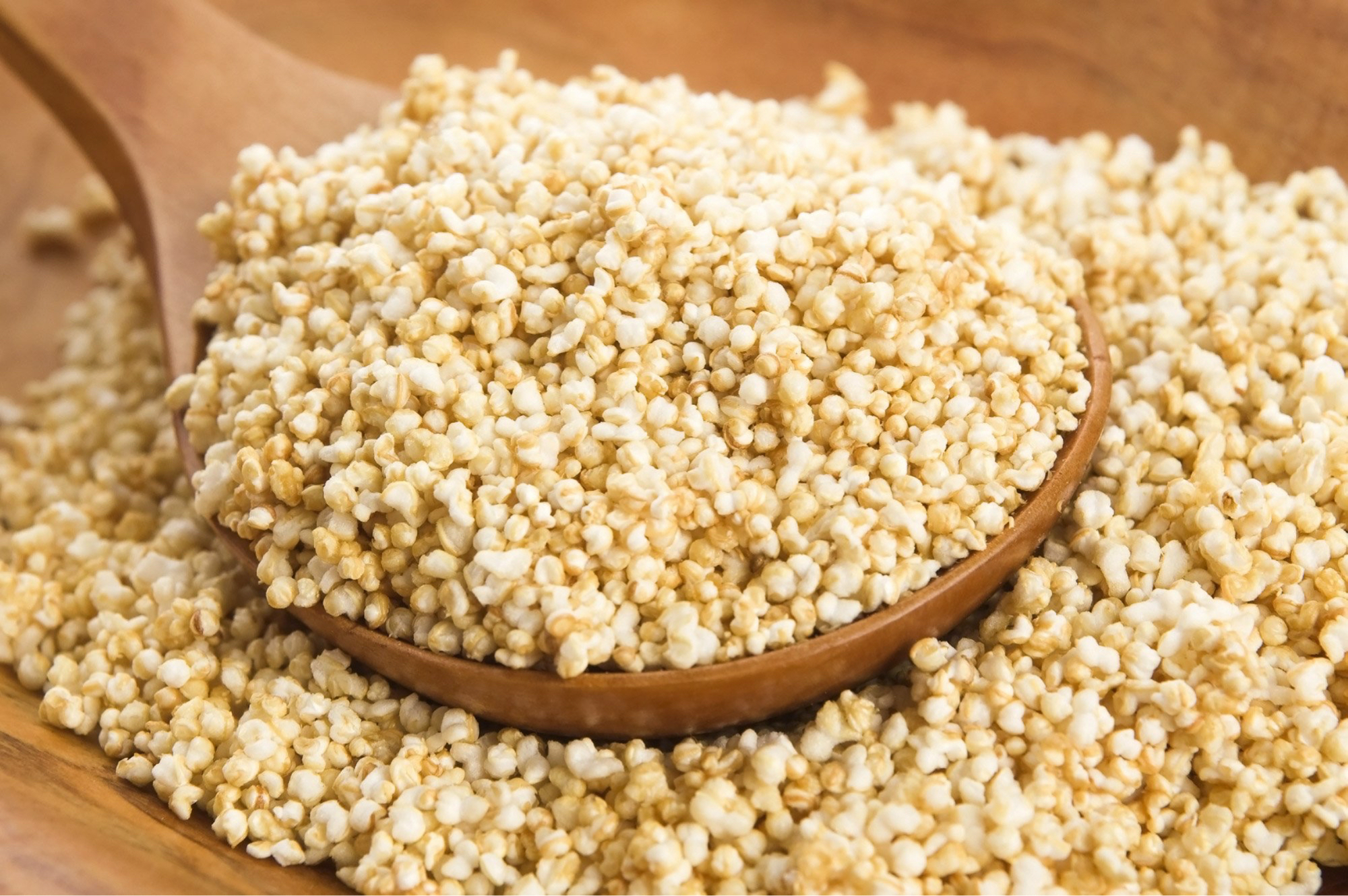
Amaranth can also be popped like popcorn! In this form, it is light and airy like popcorn although with a much smaller shape. In this form, it is typically mixed into dry cereals or desserts to add a crispy, textural element.
Nutrition Info
One cup of cooked amaranth (about 246g) has 251 calories, 9.4g protein, 3.9g of fat, 46g of carbohydrates, and 5.2g fiber. Amaranth is an excellent source of manganese, phosphorus, magnesium, and iron, and a good source of zinc, vitamin B6, vitamin B5, and folate.
Selection
Depending on where you are in the world, amaranth may be easy to find, or it may only be found in larger, more progressive grocery stores, health food stores, and bulk food stores.
Amaranth can be purchased as a whole grain, or it can be found puffed or ground into flour.
In all cases, shop at stores with high product turnover and, in the case of bulk food stores, covered bins. Find amaranth that looks dry, even-colored, and has a fresh, nutty smell. If it smells excessively bitter or musty, or shows signs of moisture, pass it over.
Storage
Store whole amaranth seeds in an airtight container in a cool, dry place. Stored this way, it can last up to a year.
Amaranth flour has a shorter shelf life, so to preserve freshness, it can be stored in the fridge or freezer, where it will stay fresh for four to six months.
Puffed amaranth has a shorter shelf life still, and should be stored carefully to avoid moisture exposure, which will deflate its puff. Store it in an airtight container in a cool, dry place and either way, consume it within a couple of months.
Cooked amaranth will keep in the refrigerator for up to a week, and in the freezer for up to six months.
Preparation
Amaranth seeds must be cooked or puffed before eating. After this, it can be used as a base for hot or cold cereals or tossed in soups or salads.
Here’s how to cook it:
To a large pot, add one cup of amaranth seeds to two and a half cups of water. Bring to a boil, then reduce heat and simmer for about 20 minutes, until the grains are fluffy and pleasantly chewy and the water is absorbed.
If you want to reach a softer, “porridge-like” consistency, simply add another half cup of water to the pot before boiling and cook another 10 minutes longer.
You can also pop amaranth like popcorn! To do this, preheat a skillet over high heat and add amaranth seeds one or two tablespoons at a time. Stir the seeds continuously with a spoon as they pop. Once they are mostly popped, remove them from the skillet. Popped amaranth is great on its own, seasoned with spices, or used as a crunchy, airy topping.